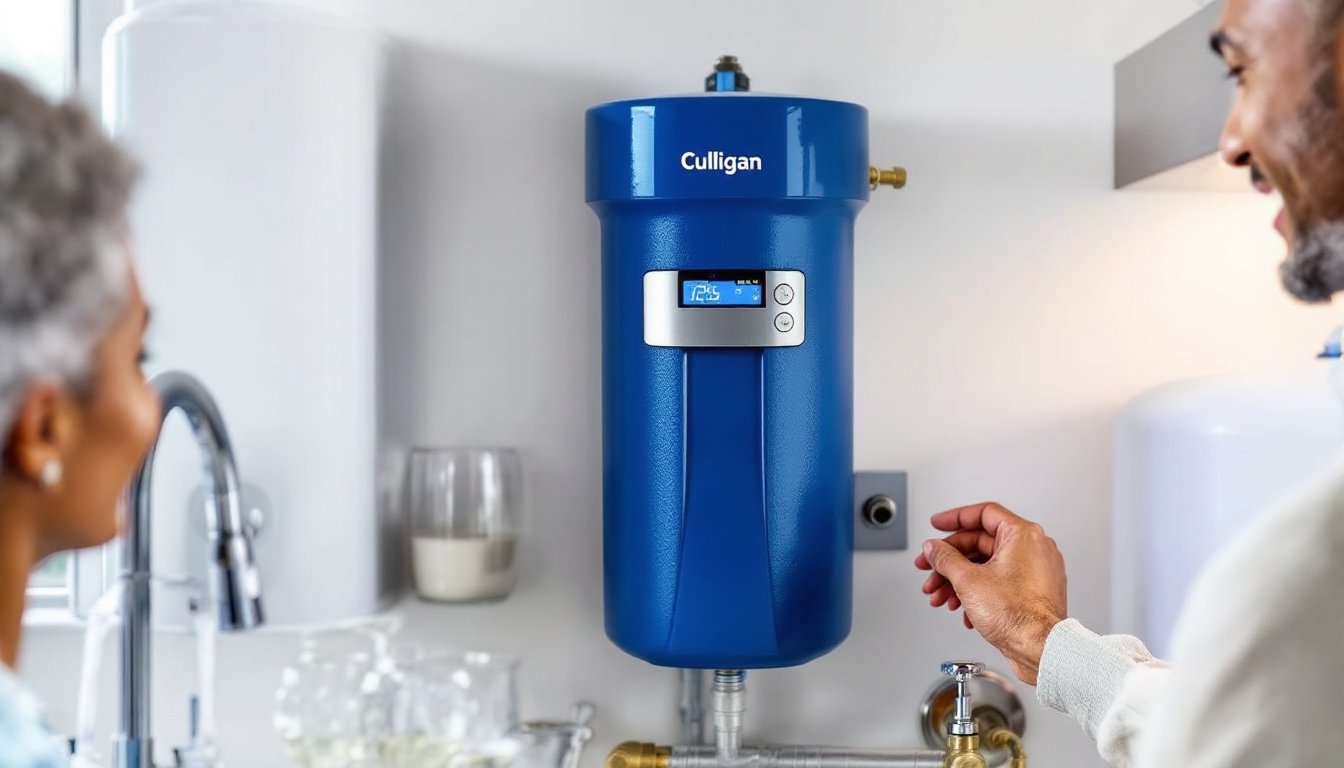

Hard water leaves stubborn mineral deposits on fixtures, clogs pipes, and forces homeowners to use more soap and detergent to get clean results. The culprits, calcium and magnesium ions, can cost hundreds of dollars annually in wasted energy, damaged appliances, and cleaning supplies. Culligan high efficiency water softeners tackle this problem by removing those minerals before they wreak havoc. Unlike standard units that consume excessive water and salt during regeneration cycles, Culligan’s high efficiency models use advanced technology to soften water while keeping operating costs down. For homeowners dealing with hard water, switching to a high efficiency system isn’t just about cleaner dishes and softer laundry, it’s about protecting appliances and putting money back in the budget.
Key Takeaways
- Culligan high efficiency water softeners use demand-initiated regeneration (DIR) to trigger cleaning cycles only when needed, reducing water consumption by 30–50 percent compared to standard systems.
- High efficiency models cut salt usage by 25–40 percent annually through improved resin media and brine tank efficiency, delivering significant long-term savings on operating costs.
- Culligan’s advanced technology extends resin tank lifespan to 10–15 years and reduces wear on components, lowering maintenance frequency and replacement expenses over time.
- To select the right system, determine your water hardness (ppm or gpg) and household flow rate through free water testing offered by Culligan dealers, then match capacity to your peak simultaneous water use.
- Smart-connected Culligan models offer mobile app monitoring and salt recharge alerts, while basic high efficiency units deliver the same water softening performance at lower upfront cost.
What Makes Culligan High Efficiency Water Softeners Different
A traditional water softener runs on a fixed schedule, regenerating the resin tank whether it’s actually needed or not. Culligan high efficiency models change that approach with demand-initiated regeneration (DIR), which triggers cleaning cycles only when the resin is genuinely exhausted. This means the system adapts to your actual water usage, if you’re away for a week, the unit doesn’t waste salt and water running a pointless cycle.
The resin media inside these systems is engineered to hold more hardness minerals per regeneration cycle than conventional softeners. Combined with brine tank efficiency improvements, this design cuts salt and water waste significantly during the cleaning process. Most high efficiency Culligan systems also feature meter-based monitoring that tracks water flow in real time, ensuring regeneration happens at exactly the right moment.
Another key differentiator is the control valve technology. Culligan’s models typically use improved valve designs that reduce backwash water requirements compared to older systems. On top of that, many units come with smart connectivity options, letting homeowners check system status and recharge alerts through a mobile app, no guessing when salt needs refilling.
Key Benefits of High Efficiency Water Softening Technology
Lower Water and Salt Consumption
Demand-initiated regeneration cuts water waste dramatically. Where a standard softener might use 40–80 gallons of water per regeneration cycle regardless of need, a high efficiency Culligan system regenerates only when necessary, often reducing water consumption by 30–50 percent. For a household of four with moderately hard water, that translates to hundreds of gallons saved annually.
Salt efficiency improves too. High efficiency resin requires less brine solution to complete the regeneration process, meaning a 40-pound bag of softener salt lasts longer. Some Culligan models accept brine tablets instead of loose salt, reducing mess and inconsistency. Over a year, families report salt bill reductions of 25–40 percent, a real saving especially in regions where water hardness is severe.
Extended Resin Tank Life
Because the resin undergoes fewer unnecessary regeneration cycles, it simply doesn’t age as quickly. Standard systems force resin through regeneration on a timer: high efficiency models stress the media only when it’s saturated. This translates directly to longer resin lifespan, often 10–15 years or more, compared to 8–10 years for conventional systems.
Less frequent regeneration also means the control valve, internal plumbing, and other components wear at a slower rate. Culligan high efficiency models are built with reinforced components designed for the reduced-stress operating profile, so parts stay reliable. When a system does need maintenance, the intervals stretch out, cutting long-term service costs and hassle.
How to Choose the Right Culligan System for Your Home
Start by knowing your water hardness and flow rate. Most Culligan dealers offer free water testing, don’t skip this. Hardness is measured in parts per million (ppm) or grains per gallon (gpg): municipal water reports also list this info. Flow rate depends on household size and simultaneous water use (showers, laundry, dishwasher running together). If peak demand exceeds the softener’s rated capacity, you’ll run out of soft water mid-cycle.
Culligan offers several high efficiency models at different price points. Entry-level units cover small to medium homes with moderate hardness (under 15 gpg), while premium models handle severe hardness and larger households. Ask your dealer about the system’s iron removal capability if your water has dissolved iron, some units handle this natively: others require a separate filter. Also verify salt storage requirements: some models need a water-resistant cabinet or basement placement due to brine tank dimensions.
Consider whether you want smart features or a simpler interface. Connected models send alerts to your phone and let you monitor regeneration remotely, but they cost more upfront. For basic operation and no internet connectivity preference, Culligan’s standard high efficiency units deliver the same water softening results at lower cost. Ask about warranty terms, Culligan typically covers tanks for 10 years and valves for longer on certain models. Installation can be DIY if you’re comfortable with plumbing connections, but most homeowners hire a professional to ensure proper backflow prevention and code compliance, especially if a permit is required (check local ordinances).
Conclusion
Culligan high efficiency water softeners combine proven ion-exchange technology with smarter controls to eliminate hard water without the waste of older systems. Lower salt and water use cut operating costs noticeably, while extended resin life reduces replacement expenses. By choosing the right model for your household’s hardness level and flow rate, you’re investing in softer water, longer-lasting appliances, and a healthier bottom line. For homeowners tired of hard water hassle, the efficiency gains and savings make these systems a practical, forward-thinking choice.