
Car carpet doesn’t stand a chance against the grime from muddy shoes, spilled coffee, and the occasional food crumb. Over time, dirt, dust, and pet hair embed themselves into fibers, dulling the interior and creating an unhygienic driving space. Regular cleaning not only restores appearance but also extends carpet life and improves air quality inside the vehicle. Knowing which automotive carpet cleaner to use, and how to use it properly, makes the difference between a quick refresh and a professional-grade result. This guide walks through the types of cleaners available, how to pick the right one for the job, and the steps to get your car’s interior looking new again.
Key Takeaways
- An automotive carpet cleaner should be chosen based on your cleaning needs—portable extractors handle deep stains while foam and liquid cleaners suit routine maintenance.
- Regular car carpet cleaning every 3–6 months removes bacteria, allergens, and odors while preserving your vehicle’s resale value and interior air quality.
- Vacuum thoroughly before applying any automotive carpet cleaner to remove 70% of surface dirt, pet hair, and debris for optimal results.
- Portable carpet cleaners with 20+ PSI suction power and proper water flow deliver professional-grade cleaning without leaving carpet oversaturated or at risk of mildew.
- Always test your chosen cleaner in a hidden area first, work in overlapping passes, and allow 4–8 hours drying time to prevent re-soiling and damage to carpet fibers.
- A combo approach using foam or liquid spot treatment followed by a portable extractor achieves salon-quality results at home while staying within budget.
Why Your Car’s Carpet Needs Regular Cleaning
Car carpet is a dirt magnet. Unlike home carpet, automotive carpet sits low to the ground and takes direct hits from outdoor debris, salt, moisture, and foot traffic. Over weeks and months, this buildup compacts into the fibers, making the carpet look dull and worn even if it’s relatively new.
Beyond aesthetics, dirty carpet harbors bacteria, dust mites, and allergens that recirculate through your cabin air, especially when your AC runs. Pet hair and food particles decompose, creating odors that get worse in heat. Regular cleaning prevents permanent stains from setting, keeps your resale value higher, and maintains a healthier cabin environment.
Most experts recommend a light cleaning every 3–6 months and a deeper clean annually, depending on climate and use. If you commute in wet or snowy weather, spill drinks, or travel with pets, lean toward the more frequent end of that range.
Common Types of Automotive Carpet Cleaners Explained
Portable Carpet Cleaners
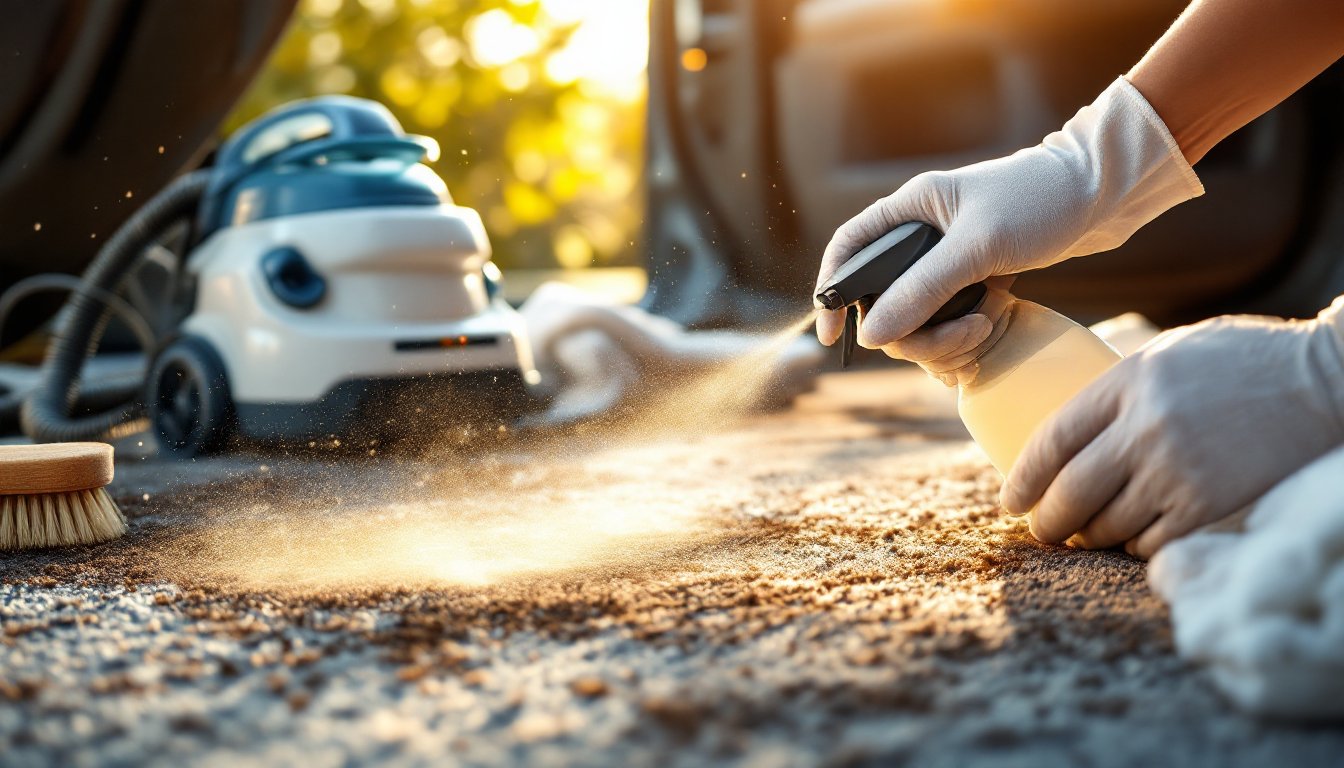
Portable (or spot) cleaners are compact machines designed for small areas, perfect for car interiors. These typically feature a small water tank, a suction motor, and either a brush head or spray nozzle. Many run on rechargeable batteries or plug into a standard outlet via a car port.
The best portable cleaners for cars deliver enough suction power (usually 20+ PSI) to extract moisture without leaving the carpet soaked. Bissell, Hoover, and Rug Doctor make popular models in the $150–$400 range that fit easily in a trunk. Smaller handheld spot cleaners (under $100) work for quick touch-ups but lack the power for thorough cleaning. If you own multiple vehicles or plan to clean furniture at home too, a mid-range portable cleaner pays for itself quickly.
Foam and Liquid Cleaners
Foam and liquid carpet cleaners are chemical products applied by hand or with a sprayer, no machine needed. Foams encapsulate dirt particles, which then vacuum away as they dry. Liquids dissolve oils and stains and require blotting or rinsing with a wet towel.
Foaming cleaners work well for light soiling and dry-clean-only fabrics. Spray, let sit 5–10 minutes, vacuum or brush, then blot dry. Popular options include Armor All, Meguiar’s, and Chemical Guys formulations priced $10–$30 per bottle.
Liquid concentrates (diluted with water) tackle heavier soiling and are cost-effective for routine maintenance. These often contain enzymes that break down organic stains. Mix concentrate per label instructions, apply, agitate gently, then extract moisture with towels or a wet-dry vacuum.
Combo approach: Many DIYers use foam or liquid for spot treatment, then follow with a portable extractor for extraction, achieving professional results at home.
How to Choose the Right Automotive Carpet Cleaner
Start by assessing your cleaning needs. Are you tackling routine dirt and dust, or fighting set-in stains and pet odor? Light maintenance cleaners (foams and sprays) suit regular upkeep. Stubborn stains and embedded grime require a portable extractor with strong suction.
Consider your vehicle’s carpet type. OEM carpet is typically olefin or nylon, both durable but sensitive to excessive moisture. Luxury vehicles sometimes use wool blends, which need gentler products. Check your owner’s manual for cleaning recommendations and never use alkaline or bleach-based products on color-treated fibers without testing in a hidden corner first.
If you’re investing in a portable cleaner, prioritize suction power (PSI), tank capacity, and hose reach. A 25–30-gallon-per-hour water flow and 20+ PSI handles most automotive jobs. Battery-powered models offer convenience but shorter run times (15–20 minutes per charge): corded options provide unlimited operation.
Budget matters. Spot cleaners and sprays ($10–$30) handle occasional touch-ups. A quality portable extractor ($200–$400) is worth it if you clean regularly or own multiple vehicles. Renting a commercial-grade machine ($30–$50 per day) makes sense for one-off deep cleans.
Always read reviews focusing on automotive use, not general household reviews. Car interiors have tight spaces and light-colored fabrics that demand reliability and safety ratings.
Step-by-Step Guide to Cleaning Your Car’s Carpet
Preparation
-
Clear and vacuum first. Remove floor mats, seat covers, and loose items. Vacuum thoroughly with an upholstery attachment to remove dry dirt, pet hair, and crumbs. Don’t skip this step, vacuuming alone removes 70% of surface soil.
-
Test the cleaner. Apply your chosen product to a hidden area (under a seat or in the trunk) to check for colorfastness. Wait 10 minutes and blot. If no discoloration occurs, proceed.
-
Spot-treat heavy stains. Pre-treat stubborn marks (gum, chocolate, grease) with appropriate spot cleaner. Let dwell per product instructions, usually 5–15 minutes.
Cleaning
-
Apply cleaner evenly. Using a spray bottle, foam dispenser, or portable cleaner’s hose, apply product section by section. Work in overlapping passes to ensure even coverage. Dampen, don’t soak, wet carpet takes hours to dry and risks mildew.
-
Agitate gently. If using liquid cleaners, lightly brush or massage the carpet with a soft-bristled brush to work the product into fibers. This helps dissolve oils without damaging pile or backing.
-
Extract or blot. If using a portable extractor, pass the suction head over each section multiple times, moving slowly. Let the machine pull moisture out, don’t rush. For foam or spray cleaners, blot with clean, dry towels, pressing firmly but avoiding aggressive scrubbing.
Finishing
-
Final rinse. Spray a light mist of clean water over treated areas and extract again. This removes residual cleaner that attracts re-soiling.
-
Dry thoroughly. Leave car doors open or crack windows to allow air circulation. Avoid driving with wet carpet. In humid climates, run the AC on recirculate mode to pull moisture from the cabin. Most carpet dries fully in 4–8 hours.
-
Vacuum once dry. After the carpet is completely dry, vacuum lightly to restore pile and remove any residual product particles.
Safety Notes: Wear nitrile gloves when handling concentrates. Ensure good ventilation if using chemical cleaners indoors. Use eye protection if splashing is possible. Never mix cleaning products, chlorine hazards can result from combining bleach with ammonia-based cleaners.
Conclusion
Keeping your car’s carpet clean isn’t complicated, it’s about choosing the right tool for the job and following a straightforward process. Whether you’re using a portable extractor, foam cleaner, or liquid concentrate, the fundamentals remain the same: vacuum first, treat stains, apply cleaner carefully, extract thoroughly, and dry completely. Regular maintenance prevents heavy soiling and extends the life of your interior. With the guidance above, you’ll achieve results that rival professional detailing while keeping your cabin fresh and healthy.