
Indoor air quality directly affects respiratory health, sleep quality, and overall comfort. Yet most homeowners don’t realize their heating, ventilation, and air conditioning systems may recirculate dust, pollen, pet dander, and indoor pollutants daily. An Energy Star air purifier offers a straightforward solution: certified equipment that actively removes contaminants while keeping energy costs in check. Unlike standard air purifiers, Energy Star models meet rigorous efficiency standards set by the EPA, meaning they deliver cleaner air without inflating the electric bill. Whether you’re managing seasonal allergies, pet odors, or general indoor air quality, understanding how Energy Star certification works helps you invest in a unit that actually pays for itself over time.
Key Takeaways
- Energy Star air purifiers use 30% less energy than non-certified models while effectively removing contaminants as small as 0.3 microns, saving $70–$140 over a 5–10 year lifespan.
- EPA-certified Energy Star air purifiers meet rigorous performance and efficiency standards, ensuring you invest in proven equipment rather than relying on marketing claims.
- Choose an Energy Star air purifier with a CADR rating of at least one-third your room’s volume per hour, and verify the actual Energy Star label through energystar.gov before purchase.
- Smart features like WiFi controls and air quality sensors add convenience, but a basic Energy Star model without advanced tech still delivers significant energy savings and air quality improvements.
- Energy Star purifiers with replaceable, recyclable filters reduce long-term waste compared to cheaper units that require complete replacement every 3–4 years.
- Look for units rated 25–35 decibels on low speed for quiet operation, especially in bedrooms, and review customer feedback on real-world CADR performance before buying.
What Is an Energy Star Air Purifier?
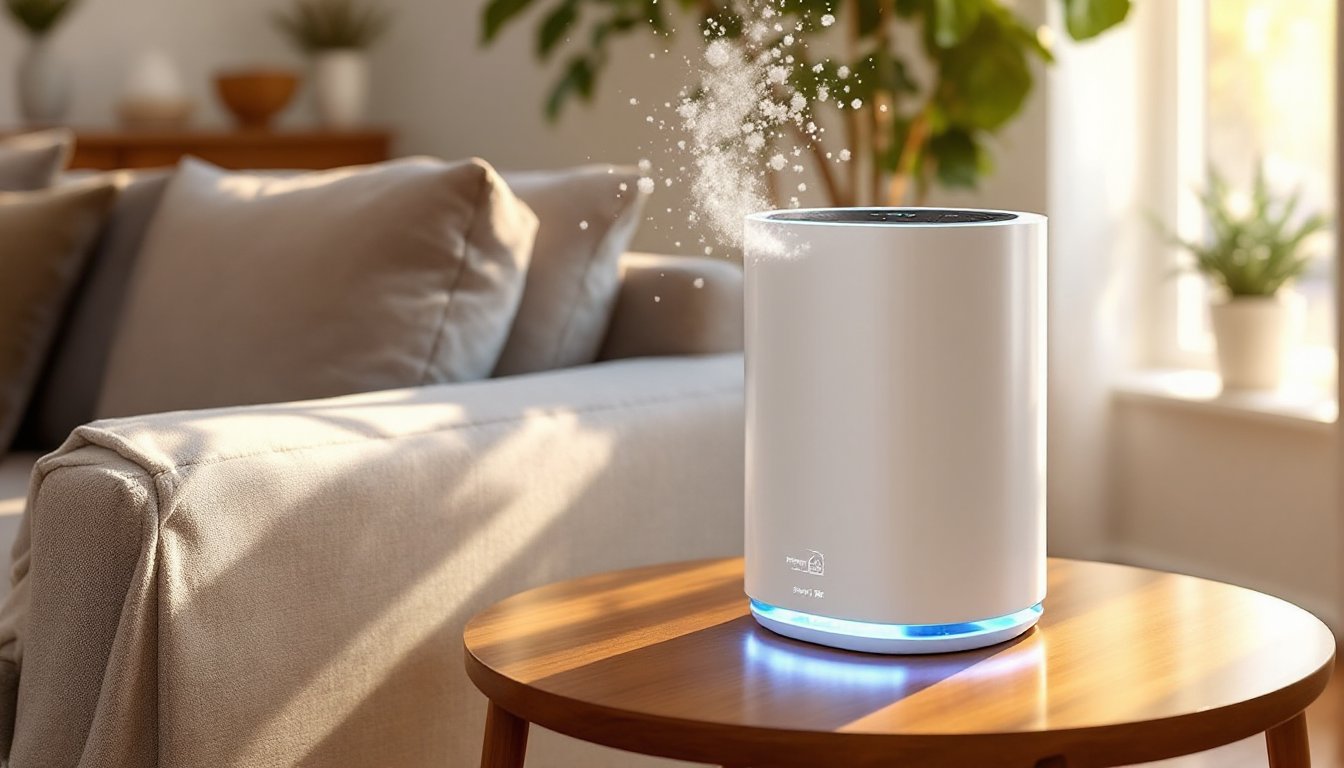
An Energy Star air purifier is a portable or installed air filtration unit that has earned EPA certification for meeting strict performance and energy efficiency standards. The Energy Star label means the device removes measurable amounts of particulates and contaminants, typically particles as small as 0.3 microns, including dust, pollen, and mold spores, while consuming 30% less energy than non-certified models.
These purifiers work by drawing room air through a series of filters: a pre-filter traps large particles, a HEPA filter (High-Efficiency Particulate Air) captures fine contaminants, and an activated carbon filter removes odors and volatile organic compounds (VOCs). The cleaned air then cycles back into the room. Energy Star models in 2026 prioritize quiet operation and smart controls, think app-enabled scheduling, air quality sensors, and auto-mode settings that adjust fan speed based on real-time pollution levels.
The certification process is no joke. The EPA independently tests each model’s clean air delivery rate (CADR) and energy usage, ensuring the unit performs at rated capacity without wasteful excess power draw. This matters because a purifier running at 24/7 baseline consumption can add $100–$300 annually to your utility bill if it’s not efficient. Energy Star cuts that burden significantly.
Key Benefits of Energy Star Certification
Lower Energy Consumption and Utility Bills
Energy Star air purifiers use motor and filter technologies optimized to move air effectively without maxing out wattage. A typical non-certified purifier draws 60–150 watts continuously: an equivalent Energy Star unit operates at 40–100 watts, depending on mode and size. Across a year of operation (assuming 8 hours daily, a conservative estimate for bedroom or living room use), that 30% efficiency gap translates to approximately 50–100 kWh saved annually.
At today’s average U.S. residential electricity rate of roughly $0.14 per kWh, that’s $7–$14 saved per year on a single unit. While it sounds modest, over a 5–10 year lifespan (typical for quality purifiers), the cumulative savings approach $70–$140 before any rate increases. For homes running multiple units or purifying continuous-use spaces like home offices, the savings stack faster. Also, Energy Star models often include smart scheduling, allowing users to run the purifier on a timer rather than constantly, a feature that many cheaper units lack, further reducing waste.
Environmental Impact and Sustainability
Energy Star air purifiers align with broader sustainability goals by reducing demand-side electricity consumption. Every kilowatt-hour saved means less fossil fuel burned at power plants and lower carbon emissions. If 1 million homes adopt Energy Star purifiers instead of standard models, the collective annual reduction is roughly 50–100 million kWh, equivalent to the annual electricity use of 5,000–10,000 typical U.S. households.
Beyond energy use, Energy Star certification encourages manufacturers to invest in durable, replaceable filter designs. Cheaper purifiers often use sealed cartridges that force replacement of the entire unit or disposal of hefty non-recyclable filter assemblies. Energy Star-certified brands typically design models with snap-out or slide-in filters made from recyclable materials, reducing landfill burden. Also, a purifier that lasts 10 years with a $15–$40 filter swap annually produces far less manufacturing waste than buying a new non-certified unit every 3–4 years because it failed prematurely or became cost-prohibitive to service.
How to Choose the Right Energy Star Air Purifier for Your Home
Selecting the right Energy Star purifier requires matching the unit’s clean air delivery rate (CADR) to your room size and air change frequency. The CADR rating, measured in cubic feet per minute (CFM), tells you how much air the purifier cleans per minute. Look for a CADR of at least one-third of your room’s total volume per hour. For example, a 250-square-foot bedroom (assume 8-foot ceiling = 2,000 cubic feet) needs a CADR of 65–75 CFM to cycle the entire room’s air three times hourly.
Consider filter type and replacement cost. HEPA filters require replacement every 6–12 months depending on use and air quality: activated carbon filters often need swaps at the same interval. A unit with an $80 annual filter cost might seem pricey upfront but becomes reasonable if it runs 10+ years reliably. Cheap purifiers sometimes hide poor filter accessibility or sell proprietary cartridges at inflated prices.
Noise level matters, especially for bedrooms. Energy Star models are engineered for quieter operation: look for units rated 25–35 decibels on low speed. At 40+ decibels, the fan becomes noticeable and disruptive at night. Check the decibel rating on the product spec sheet, not marketing claims.
Smart features like WiFi controls, air quality sensors (which detect PM2.5 and VOC levels in real time), and app scheduling add convenience and help you run the unit only when needed. But, a basic Energy Star purifier without smart functions will still save money and improve air quality, don’t pay for tech you won’t use.
Final check: verify the unit carries an actual Energy Star label on its packaging and the EPA’s official database. Counterfeit certifications exist, so confirm through the Energy Star product finder on energystar.gov before purchase. Look at verified customer reviews mentioning noise, filter longevity, and whether the unit meets advertised CADR performance in real-world conditions. Avoid ultra-cheap models claiming Energy Star certification: if the price seems too low, the certification likely isn’t legitimate.
Conclusion
Investing in an Energy Star air purifier delivers two concrete wins: cleaner indoor air and lower utility bills. The certification ensures you’re buying proven equipment backed by EPA testing, not marketing hype. By matching CADR to room size, planning for filter replacements, and choosing wisely between basic and smart features, you’ll find a unit that pays dividends over its lifetime while keeping your family’s lungs healthier and the planet slightly greener.