
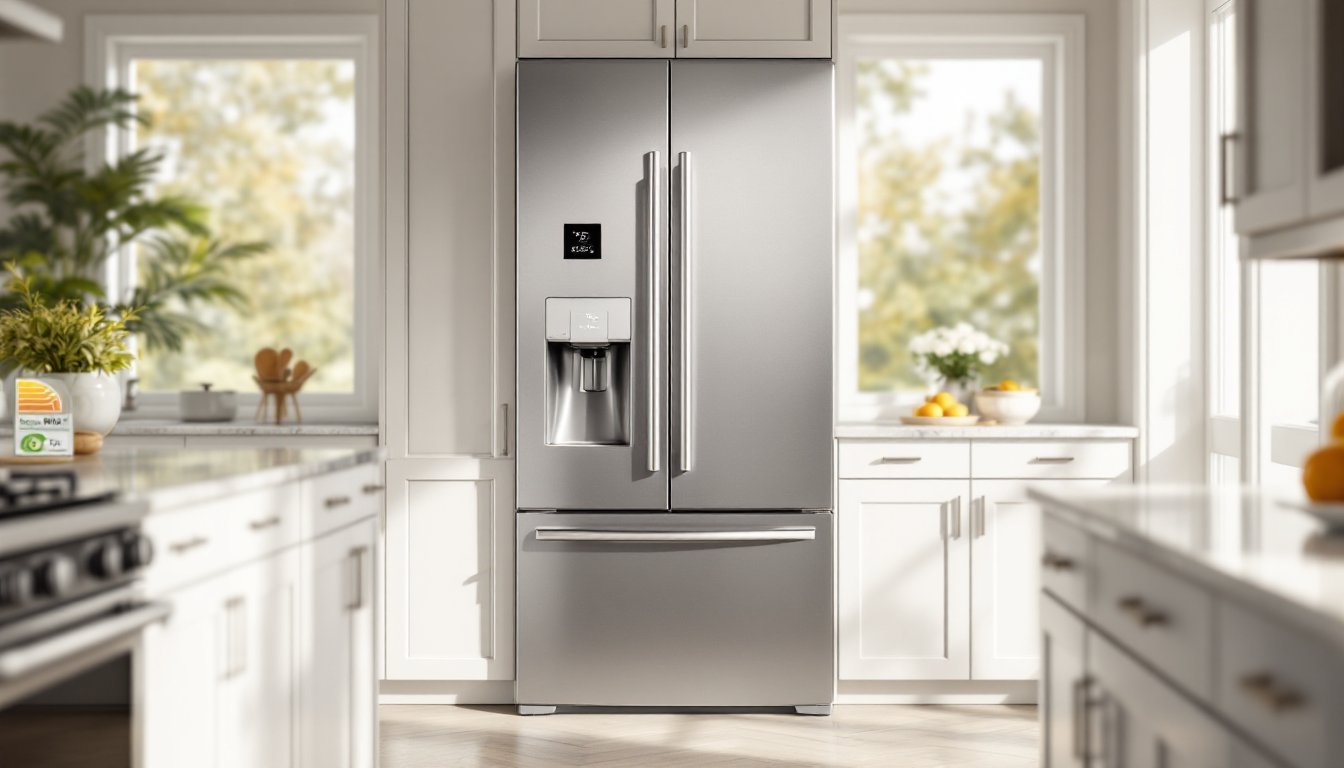

When a refrigerator runs 24/7, it’s one of the biggest energy consumers in most homes, typically accounting for 10–15% of household electricity use. That’s why choosing an energy-efficient model can cut hundreds of dollars from annual utility bills while reducing environmental impact. In 2026, refrigerator technology has advanced significantly, with innovations like inverter compressors and improved insulation making it easier than ever to find a unit that keeps food fresh without draining the wallet. This guide walks through what makes a refrigerator truly efficient, which features to look for, and how to calculate real long-term savings so the investment pays for itself.
Key Takeaways
- An energy-efficient refrigerator can save $600–$900 over its lifetime compared to standard models by using 20–30% less electricity.
- Look for the ENERGY STAR label and check the EnergyGuide label’s kilowatt-hour (kWh) rating to compare actual energy consumption across similar models.
- Inverter compressors and advanced insulation are the most important features that make a refrigerator truly efficient, reducing energy waste during cooling cycles.
- Top-freezer models are the most energy-efficient refrigerator style, typically consuming 600–700 kWh annually, while side-by-side models rank least efficient.
- Calculate your actual payback period by comparing the upfront price difference against annual energy savings; in high-cost electricity regions, efficient models pay for themselves in 5–7 years.
- Refrigerator efficiency ratings improve every few years, so a 2026 model uses significantly less energy than a 2015 ENERGY STAR-certified unit.
Why Energy Efficiency Matters in Your Kitchen
The kitchen refrigerator never stops working. Unlike a dishwasher or washing machine that runs on demand, a fridge cycles its compressor continuously to maintain temperature. Over a typical 10–15 year lifespan, a standard refrigerator can cost $2,000–$3,000 in electricity alone. An ENERGY STAR-certified model, by contrast, uses roughly 20–30% less energy than code-minimum units, translating to $600–$900 in savings over its lifetime.
Beyond the wallet, there’s the environmental angle. Refrigerators that run inefficiently waste electricity generated from fossil fuels, driving up your household carbon footprint. A high-efficiency unit reduces that burden measurably. For homeowners committed to lowering utility bills and environmental impact, the refrigerator is one of the highest-return places to invest in efficiency upgrades.
Understanding Energy Star Ratings and Certifications
When shopping for a refrigerator, the ENERGY STAR label is your starting point. This certification, overseen by the EPA, means the unit meets strict efficiency standards, specifically, it consumes no more than a set amount of electricity per year based on size and configuration. In 2026, ENERGY STAR models typically perform 20–30% better than federal minimum standards.
But “ENERGY STAR” is just one baseline. Look deeper at the unit’s actual annual energy consumption, listed in kilowatt-hours (kWh) on the yellow EnergyGuide label. A side-by-side refrigerator might use 650 kWh annually, while a French-door model of similar capacity could use 720 kWh, a meaningful difference over time. Always compare models in the same style and capacity class: a smaller fridge will naturally use less energy than a larger one. Regional certifications (like Energy Star Most Efficient) push the bar even higher, demanding 25% better performance than standard ENERGY STAR models.
Key Features That Make Refrigerators More Efficient
Modern efficient refrigerators share several critical design elements that reduce energy waste. Understanding these features helps you spot genuinely efficient models rather than marketing hype.
Inverter Compressors and Variable Speed Technology
Older refrigerators use single-speed compressors that turn on and off like a light switch, full power or nothing. Inverter compressors, standard in 2026’s efficient models, adjust their speed continuously. When the fridge is close to the set temperature, the compressor slows down, using less energy. When demand spikes (say, after you load in groceries), it ramps up smoothly. This variable approach reduces energy waste dramatically, especially during off-peak cooling periods. Many Korean and Japanese brands pioneered this technology, and it’s now standard in premium U.S. models.
Advanced Insulation and Door Seals
A refrigerator’s insulation quality directly impacts how hard the compressor must work. High-efficiency models use thicker, denser polyurethane foam insulation (often 3.5–4 inches thick) compared to standard models. This thermal barrier keeps cold air inside longer, reducing cycling frequency.
Equally critical is the door seal gasket. A worn or loose gasket lets cold air escape, forcing the compressor to work overtime. Efficient models use multi-layer gaskets with a magnetic design that creates a tight, lasting seal. Check the gasket visually before buying: a uniform, unbroken seal without cracks or gaps is essential.
Top Refrigerator Styles for Energy Savings
Not all refrigerator styles consume energy equally. Understanding the trade-offs helps match efficiency to your needs.
Top-freezer models are the most efficient style overall. With the freezer compartment above and the fridge below, cold air naturally settles downward, reducing the need for active air circulation. These models typically use 600–700 kWh annually and cost $1,000–$1,800.
French-door refrigerators are increasingly efficient but typically use 10–15% more energy than top-freezers because cold air escapes more easily when either door opens. But, their narrower profile and generous fridge space appeal to many households. Look for inverter compressors and narrower door widths to minimize energy loss per use.
Side-by-side models rank least efficient: they require more space and active air management to keep both compartments cold. Avoid these if energy savings is the priority.
Bottom-freezer models split the difference, offering good efficiency (around 650–720 kWh annually) with convenient fridge-at-eye-level access. They’re a solid compromise for households prioritizing both efficiency and usability.
How to Calculate Your Long-Term Savings
Don’t let sticker price alone sway your decision. A higher upfront cost pays dividends if energy consumption is significantly lower.
Start with the annual energy consumption (in kWh) from the EnergyGuide label. Multiply that by your local electricity rate. If a refrigerator uses 650 kWh annually and your rate is $0.14 per kWh, the annual energy cost is roughly $91. Compare that to a less efficient model at 800 kWh: $112 annually. The difference is $21 per year, which sounds modest until you multiply by a 12-year lifespan: $252 in direct savings, not counting rate increases.
Now factor in the price difference. If the efficient model costs $400 more upfront, the payback period is roughly 19 years, longer than the fridge’s lifespan. But if the price gap is $150, payback is under 8 years, and you pocket savings for the remaining 4–7 years. Use online calculators (many manufacturer websites include them) to run your specific numbers with your local electricity rate, which varies widely by region. In high-cost areas like California or the Northeast, payback is often 5–7 years. In lower-cost regions, it may extend to 10–12 years, but savings still add up.
One final note: efficiency ratings improve every few years as technology advances. A new refrigerator today uses significantly less energy than one from 2015, even if the older model was ENERGY STAR-certified at its time.