
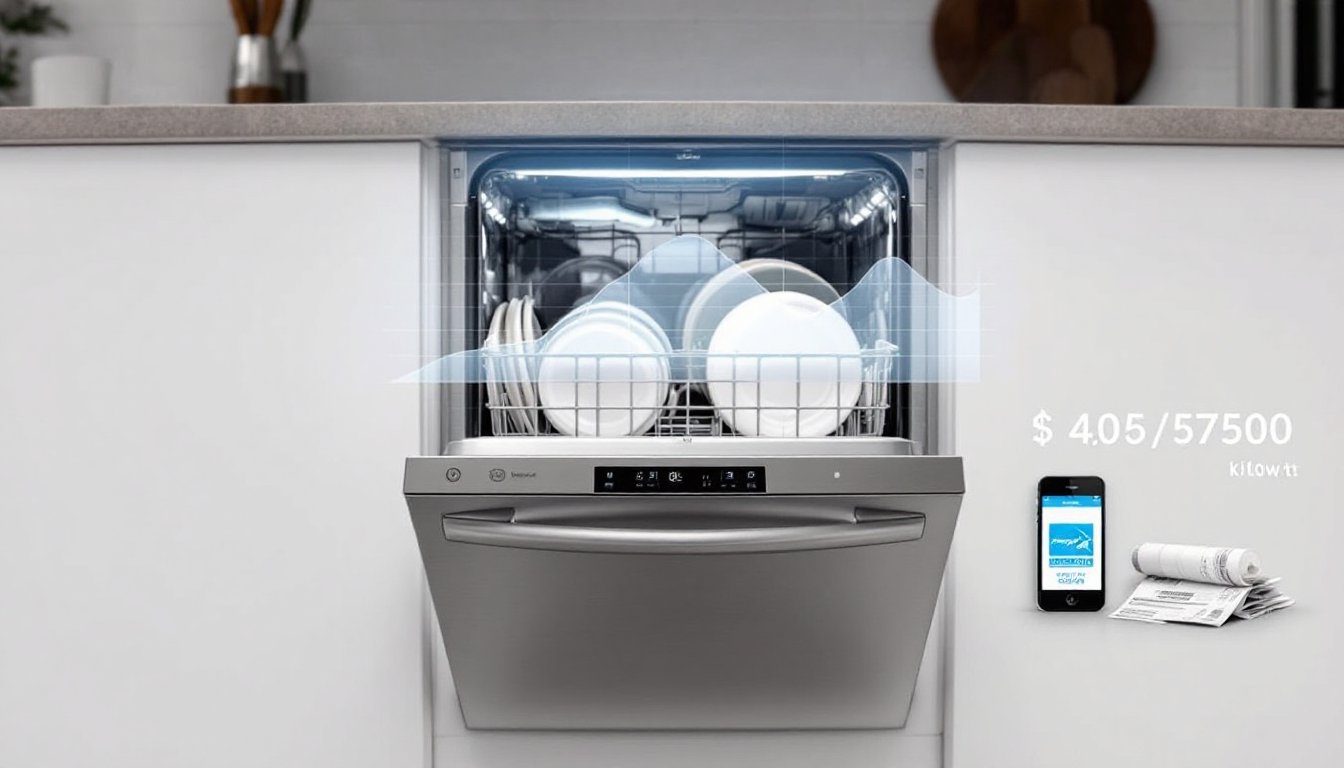

Most homeowners don’t think about how much energy their dishwasher uses until the utility bill arrives. The truth is, modern dishwashers are far more efficient than they were a decade ago, but energy consumption still varies widely depending on the model, cycle settings, and how often you run the machine. Understanding these variables helps homeowners make smarter purchasing decisions and optimize their energy bills. This guide breaks down actual energy consumption figures, explores what drives usage differences, and shows where real savings opportunities exist for budget-conscious DIYers and home managers.
Key Takeaways
- Modern Energy Star certified dishwashers use 3-5 kWh per cycle, while older pre-2012 models consume 12-27 kWh, costing homeowners up to $475 more annually.
- Water heating accounts for roughly 80% of dishwasher energy consumption, making eco cycles and heated dry disabling the most effective energy-saving strategies.
- Upgrading to a new certified dishwasher pays for itself within 5-7 years through energy savings if your current model is 12+ years old.
- Running full loads only, using eco cycles for lightly soiled dishes, and setting your home water heater to 120°F can reduce dishwasher energy use by 1-2 kWh per load.
- The Energy Factor rating (kWh per 100 place settings) on the EnergyGuide label helps compare dishwasher models fairly—two similar-priced units can differ by 1-2 kWh per cycle.
Average Energy Consumption by Dishwasher Type
A standard Energy Star certified dishwasher uses between 3 and 5 kilowatt-hours (kWh) per cycle, while older, non-certified models may consume 8 to 27 kWh, a significant difference that compounds over a year of regular use.
Conventional full-size built-in dishwashers that meet current federal standards consume roughly 3.5 kWh per cycle on average. Compact or drawer-style dishwashers typically use 2 to 3 kWh per cycle because they hold fewer dishes and require less water heating. On the flip side, vintage dishwashers manufactured before 2010 can consume 12 to 27 kWh per cycle, making them among the worst energy hogs in a household.
Portable and countertop models fall between these extremes. A portable dishwasher usually draws 4 to 6 kWh per cycle, while hand-washing dishes in a sink requires approximately 27 to 30 gallons of water, far more than a full dishwasher cycle, which uses only 5 to 8 gallons. This is why Energy Star models save water and energy simultaneously.
To put this in perspective: if a household runs a dishwasher five times per week using a certified model at 3.5 kWh, that’s roughly 910 kWh annually. At an average U.S. electricity rate of $0.16 per kWh (as of 2026), the annual cost is approximately $145. An older model under the same usage would cost around $400 per year, underscoring why upgrading pays off.
Factors That Impact Your Dishwasher’s Energy Usage
Cycle Type and Temperature Settings
The cycle you select, more than almost anything else, determines how much energy a single load consumes. An eco or light cycle on a modern dishwasher uses 3 to 4 kWh and runs for 2 to 3 hours, relying on lower water temperature and shorter spray times. A standard cycle typically uses 4 to 5 kWh over 2 to 3 hours. Heavy or “pots and pans” cycles jump to 5 to 7 kWh because they require hotter water (typically 140°F to 150°F), longer spray patterns, and multiple rinse stages.
Water temperature is the single biggest energy driver. Heating water accounts for roughly 80% of a dishwasher’s energy consumption. A cycle using hot water (130°F) consumes significantly more energy than one using warm water (100°F) or an eco setting that heats only to the minimum required temperature. Modern dishwashers also feature soil sensors that detect how dirty the dishes are and adjust cycle length automatically, a feature that cuts wasted energy on light loads.
Booster heaters in the dishwasher’s internal tank allow the unit to heat water independently, so homeowners don’t have to set their home water heater above 120°F (which saves on standby heating losses). If your dishwasher lacks this feature, running the machine at night when tap water is cooler forces the unit to work harder.
Age and Model Efficiency
Dishwashers manufactured before 2012 rarely met today’s federal efficiency standards. A dishwasher from 2005 to 2010 typically uses 12 to 20 kWh per cycle: one from 2000 or earlier can exceed 25 kWh. The jump in efficiency reflects improvements in spray arm design, pump efficiency, insulation, and sensor technology that emerged in the 2010s and accelerated through 2026.
Energy Star certification (or equivalent international ratings like A+++ in Europe) ensures a model meets rigorous efficiency thresholds. In the U.S., the Federal Trade Commission (FTC) sets minimum energy factor standards, updated periodically. As of 2024, new models must achieve an energy factor of at least 0.68, meaning they consume no more than about 3.2 kWh per 100 place settings on a standardized test.
High-end models from brands like Bosch, Miele, and Blomberg often use 2.5 to 3.5 kWh per cycle and include features like third-level racks, increased insulation, and precision motors that reduce water waste. Mid-range certified models from LG, Samsung, and Whirlpool typically consume 3.5 to 4.5 kWh and offer good value. Budget-friendly certified models hover around 4 to 5 kWh but deliver the same cleaning performance on standard cycles.
The age of your current dishwasher matters too. If it’s running fine mechanically but is 12+ years old, replacing it with a modern certified unit pays for itself in energy savings within 5 to 7 years for many households.
Annual Costs and Energy Savings Strategies
Calculating annual energy cost is straightforward once you know consumption and your local electricity rate. Multiply the per-cycle kWh by cycles per year, then by your utility rate. A certified dishwasher using 3.5 kWh at 5 cycles per week and $0.16 per kWh costs about $145 annually. The same household with a pre-2012 model at 15 kWh per cycle pays approximately $620 per year, a $475 annual gap.
But, real-world savings depend on several factors: electricity rates vary by region (California averages $0.22/kWh, while Louisiana averages $0.10/kWh): actual water heating efficiency depends on your home’s water heater type and insulation: and usage frequency differs across households. Always check your utility bill for your actual rate, including any time-of-use pricing.
Energy savings strategies require minimal investment:
- Run full loads only. A half-empty cycle wastes energy per dish cleaned. Modern sensors help, but human discipline is the cheapest fix.
- Use eco cycles for lightly soiled dishes. Many homeowners default to standard or heavy cycles unnecessarily. Eco cycles clean light loads completely in 2 hours while saving 1 to 2 kWh.
- Disable the heated dry cycle. Many dishwashers offer an air-dry option that saves 0.5 to 1 kWh per load. A homeowner opening the door after the wash cycle completes achieves the same result free.
- Don’t pre-rinse dishes heavily. Modern detergents and spray patterns handle food residue fine. Excessive pre-rinsing wastes 5 to 10 gallons per load at the sink.
- Set your home water heater to 120°F. Dishwashers with internal boosters don’t need hotter incoming water and perform just as well. This saves energy across your entire home.
- Invest in a new certified model if yours is 12+ years old. Payback periods of 5 to 7 years make this a solid home improvement investment, especially in high-electricity-rate regions.
For those considering a replacement, comparison shopping by Energy Factor (kWh per 100 place settings) beats brand loyalty. Two models at similar price points can differ by 1 to 2 kWh per cycle, translating to $50 to $100 annual savings. Look for the EnergyGuide label, required on all dishwashers, which estimates annual operating cost based on a standard use pattern.
Conclusion
A modern certified dishwasher uses 3 to 5 kWh per cycle, while older models consume triple that amount. The math favors upgrading if your machine is over a decade old, and optimizing cycle selection and load size immediately cuts costs for any user. Water heating dominates the energy equation, so disabling unnecessary drying cycles and running eco modes on light loads pay dividends without any capital investment. Whether you’re replacing an aging appliance or fine-tuning an existing one, understanding energy consumption empowers smarter, more economical choices in the kitchen.