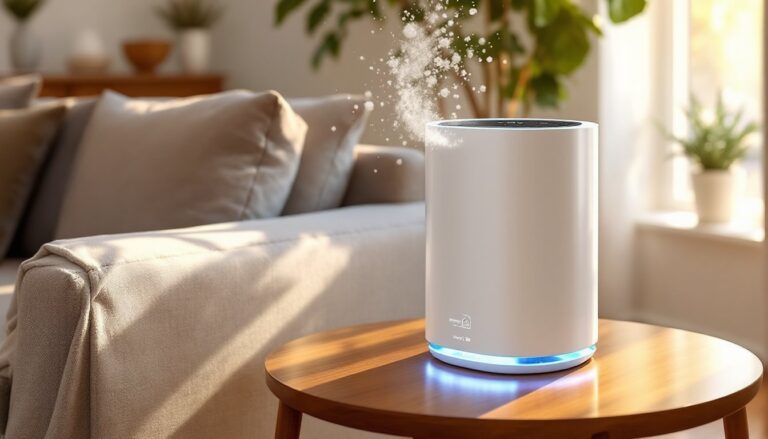
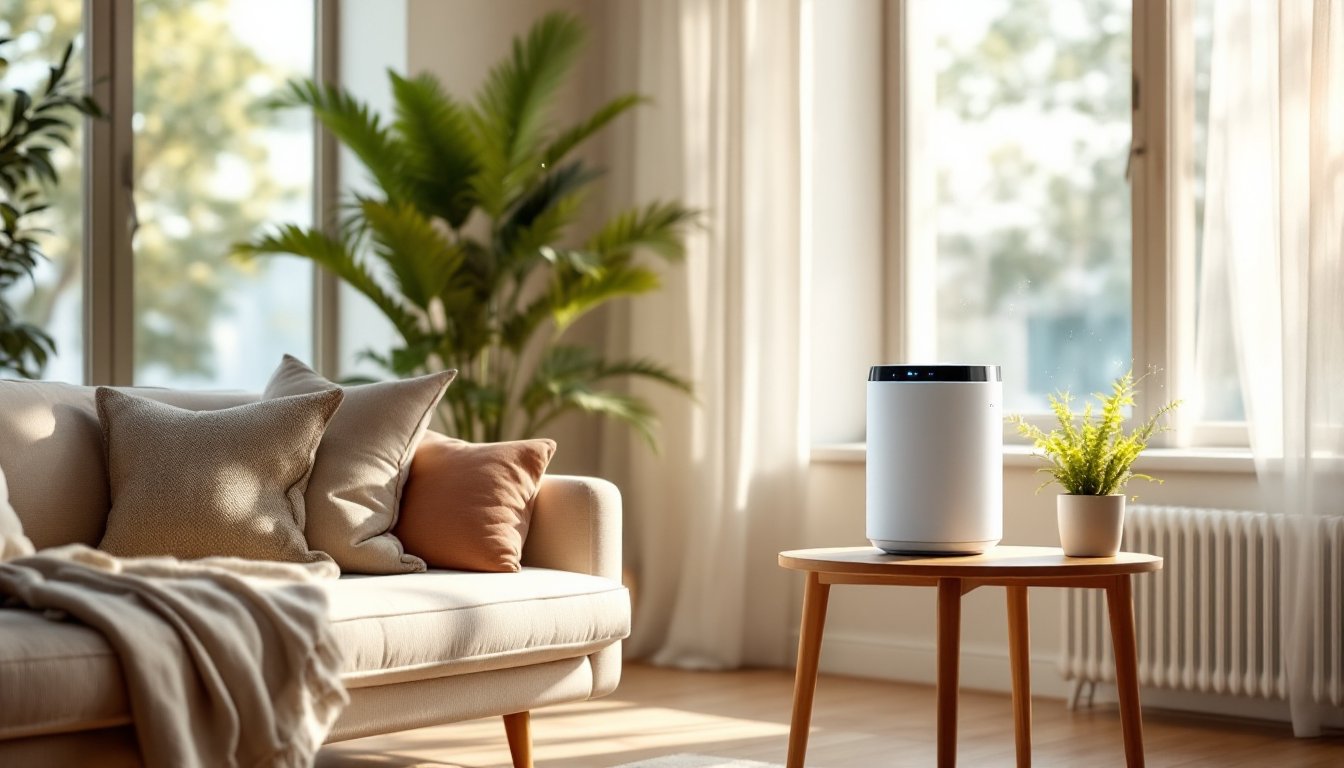

An air purifier running 24/7 sounds great, until the electric bill arrives. Most homeowners assume they have to choose between clean air and reasonable utility costs, but that’s simply not true. Energy efficient air purifiers deliver serious filtration performance without becoming power hogs. The trick is knowing what to look for: HEPA filtration that doesn’t demand excessive wattage, smart sensors that scale power use to actual air quality, and units sized appropriately for the room. This guide walks through the specifics, how to read energy labels, calculate real operating costs, and pick a model that keeps air clean and electricity costs low.
Key Takeaways
- An energy efficient air purifier can reduce annual electricity costs from $150–$600 to just $30–$80 while maintaining true HEPA filtration performance.
- Smart sensors and automatic mode cut energy consumption by 40–60% by scaling power based on real air quality instead of running at constant high speed.
- Proper sizing matters: use the air changes per hour (ACH) rating and room volume calculation to match the purifier to your space and prevent wasteful over- or undersizing.
- Calculate total operating costs by factoring in both electricity and filter replacement expenses, not just peak wattage, to compare long-term value across models.
- Multi-stage pre-filtration extends HEPA filter life and reduces motor strain, keeping an energy efficient air purifier running at optimal efficiency longer.
Why Energy Efficiency Matters in Air Purifiers
A standard air purifier draws between 30 and 200 watts depending on size and filtration complexity. Run one continuously at full speed, and you’re looking at 720 to 4,800 watt-hours per day. Over a year, that adds up. At an average U.S. electricity rate of $0.13 per kilowatt-hour, a high-power unit running flat-out costs roughly $150 to $600 annually, before filter replacements.
Energy efficient air purifiers typically use 30 to 60 watts at normal operation, cutting annual costs to $30 to $80. That’s not chump change, especially if the unit runs in a bedroom, kitchen, or office all day. Beyond the wallet, lower power consumption means less strain on home wiring, fewer cooling demands in summer (since the motor generates less heat), and reduced environmental footprint. Many municipalities also incentivize efficient appliances through rebates, so the upfront cost difference shrinks fast.
Key Features That Define an Energy Efficient Model
HEPA and Pre-Filters: Smart Filtration Without Excess Power
True HEPA filters capture 99.97% of particles down to 0.3 microns, and that performance standard is non-negotiable for any purifier worth buying. But here’s the thing: some manufacturers compensate for poor filter design by cranking motor speed to squeeze more air through. That’s wasteful. Efficient models use well-engineered filter media and airflow geometry that lets True HEPA filters do their job at moderate speeds.
A pre-filter (or coarse filter) is the unsung hero of efficiency. It catches large particles, dust, pet hair, lint, before air hits the HEPA stage. This extends HEPA life and lets the motor work less hard. Models with multi-stage pre-filtration (often a washable mesh layer followed by a disposable coarse filter) keep energy demand steady longer. Before the HEPA gets clogged and forces the motor to strain.
Smart Sensors and Automatic Mode
Smart air quality sensors are game-changers for efficiency. They continuously monitor PM2.5 (fine particulate matter), PM10 (coarser dust), and sometimes VOCs (volatile organic compounds). When air is clean, the unit drops to a low-speed “sleep” mode, using minimal power. When sensors detect pollution, someone cooking, a pet stirring dust, outdoor air leaking in, the purifier ramps up automatically.
Automatic mode alone can cut energy use by 40 to 60% compared to running at a constant high speed. You get cleaner air right when you need it, without paying to purify already-clean air. Look for sensors labeled PM2.5 sensors (laser-based or optical) and units with adjustable sensitivity. Some models also integrate with smart home systems, letting users schedule operation by time of day or connect to weather data to anticipate outdoor pollution spikes.
How to Calculate Real Energy Costs
The wattage rating on the box is just the start. To find true operating costs, multiply watts by hours per day, divide by 1,000 to get kilowatt-hours, then multiply by your local electricity rate.
Example: A 45-watt purifier running 8 hours daily = (45 × 8) ÷ 1,000 = 0.36 kWh per day. At $0.13 per kWh, that’s about $17 per year in electricity alone.
But that’s at rated wattage on high speed. In automatic mode, the same unit may average only 20 watts, dropping the cost to $7 per year. Check the product specs for average wattage in auto mode, reputable brands list it. Compare that figure across models, not just peak wattage.
Don’t forget filter costs. HEPA filters typically cost $40 to $100 per replacement and need changing every 6 to 12 months depending on air quality and usage. A cheap purifier with an energy-efficient motor but pricey filters can end up costing more long-term. Factor in total annual operating cost: electricity plus filters divided by 12.
Choosing the Right Size for Maximum Efficiency
Undersizing a purifier kills efficiency. Put a unit rated for a 250 square-foot bedroom into a 500 square-foot open-concept living area, and the motor runs constantly at high speed, chasing its tail. Oversizing is wasteful too, a industrial-grade unit for a small office wastes energy cycling at low speeds.
Manufacturers rate purifiers by air changes per hour (ACH) or clean air delivery rate (CADR). An ACH of 4 means the unit filters the entire room’s air four times per hour. For bedrooms and small offices, ACH 3–4 is standard. For larger living spaces or homes with pets and allergens, aim for ACH 4–5.
To calculate the right size, measure room length, width, and ceiling height in feet, multiply them together for cubic feet, then match it to the purifier’s coverage area. A 200 sq ft bedroom (assume 8-foot ceilings) = 1,600 cubic feet. A purifier with a 250 sq ft coverage area at ACH 4 handles it comfortably without oversizing. Don’t just guess, use the manufacturer’s spec sheet. Properly sized units run lower fan speeds, use less power, and filter air more consistently.
Conclusion
Buying an energy efficient air purifier isn’t about settling for weak filtration. It’s about matching the right technology, HEPA filtration, smart sensors, and proper sizing, to your actual needs and space. Start by calculating your room’s volume, check real energy costs in auto mode, and factor in filter expenses over time. The upfront price difference between a standard and an efficient unit often pays back in utility savings within 2–3 years. Clean air and a lighter electric bill aren’t mutually exclusive. Choose wisely, and you get both.