
Home automation has evolved from a far-fetched fantasy into an everyday reality. What once seemed like pure science fiction, homes that respond to voice commands, systems that learn occupants’ preferences, and devices that communicate seamlessly, is now standard in millions of households worldwide. Understanding how we got here reveals not just technological progress, but a steady march toward making homes more efficient, convenient, and responsive to our needs. This journey spans more than a century, marked by bold inventors, practical innovations, and the relentless push to make life at home simpler.
Key Takeaways
- Home automation evolved from early 1900s innovations like electric doorbells and thermostats into today’s AI-powered smart homes through over a century of technological breakthroughs.
- The X10 protocol (1975) marked the first practical networked home automation system, proving consumer demand for remote control of lights and appliances despite its limitations.
- The smartphone era revolutionized home automation by enabling app-based control and voice assistants like Alexa and Google Assistant, transforming the technology from a luxury into mainstream adoption.
- Wireless standards like Z-Wave, ZigBee, and Wi-Fi replaced proprietary systems, making smart homes more affordable, reliable, and accessible to average homeowners.
- Modern home automation now features AI-driven predictive capabilities—from learning thermostats to adaptive security systems—powered by machine learning and interoperability standards like Apple HomeKit and Matter.
The Origins Of Home Automation In The Early 1900s
The story of home automation begins not with computers or Wi-Fi, but with electricity itself. In the early 1900s, as homes across America started receiving electric power, inventors and engineers began imagining what electrical systems could do beyond simply powering lights and appliances.
One of the first tangible steps toward automated homes came with the development of electric doorbells, thermostats, and garage door openers. These weren’t networked or intelligent, they were simple electromechanical devices, but they represented a fundamental shift: the idea that homes could be engineered to respond automatically to user input.
The 1939 New York World’s Fair showcased “Elektro,” a seven-foot-tall robot that could walk, talk, and flip light switches. While Elektro was more novelty than practical tool, it captured the public imagination and demonstrated serious engineering progress. Visionary companies and inventors had already begun patenting ideas for centralized home control systems. These early concepts wouldn’t become commercially viable for decades, but they established the conceptual foundation: homes could be smarter, more responsive, and easier to manage.
The Rise Of Consumer Electronics And Appliances (1940s–1970s)
After World War II, prosperity and technological advancement collided in American households. The 1950s and 1960s brought refrigerators, washing machines, dishwashers, and televisions into everyday homes. Manufacturers marketed these as “labor-saving” devices, a type of automation in their own right, even if they operated independently.
During this era, the concept of a “home of the future” became a recurring theme in advertising and popular culture. Magazines and corporations envisioned homes where appliances worked in concert, where homeowners could control systems remotely, and where convenience was paramount. General Electric and Westinghouse produced concept homes and marketing materials exploring these ideas, though the technology to realize them remained out of reach.
Early Computing And Home Control Systems
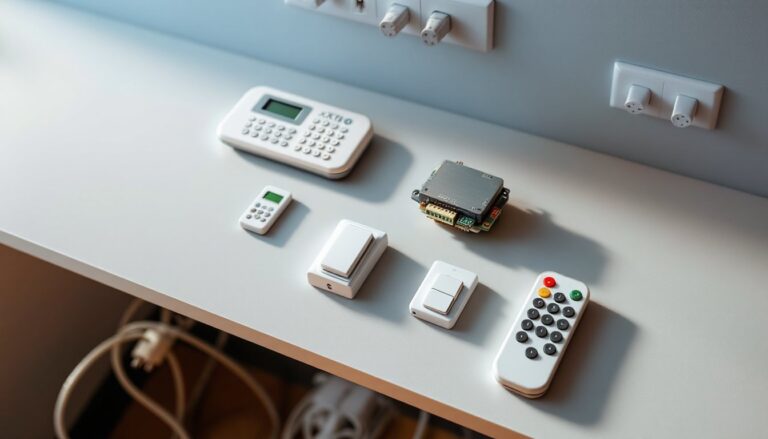
By the 1970s, personal computing was emerging, and some forward-thinking manufacturers began experimenting with early computer-based home control systems. The most notable was the X10 protocol, developed in 1975. X10 used existing electrical wiring to transmit control signals between devices, allowing homeowners to remotely turn lights and appliances on and off via a control panel or simple remote.
X10 wasn’t without limitations, it was slow, unreliable over long distances, and required specific hardware, but it represented the first practical step toward networked home automation. Enthusiasts and early adopters experimented with X10 systems throughout the 1980s and 1990s, laying the groundwork for future wireless solutions. The protocol demonstrated demand for home automation and proved that consumers would invest in systems if they worked reliably.
The Digital Revolution And Wireless Technology (1980s–2000s)
The 1980s and 1990s witnessed explosive growth in digital technology, computing power, and, crucially, wireless communication. As microprocessors became smaller and cheaper, they began appearing in everything from toasters to thermostats.
Companies like Philips, Siemens, and later startups, developed proprietary home automation systems that used wireless protocols to coordinate devices. Insteon, Z-Wave, and ZigBee emerged as competing wireless standards, each offering advantages in range, power consumption, and bandwidth. Unlike X10, these protocols were more reliable, faster, and designed from the ground up for wireless mesh networking, meaning devices could relay signals through each other to extend coverage.
During this period, home automation shifted from a hobbyist pursuit to a legitimate industry. Installation companies grew, products became more standardized, and homeowners could reasonably expect to integrate security systems, lighting controls, and climate management into a single interface. The rise of the internet in the 1990s also enabled remote access: a homeowner could theoretically check cameras or adjust a thermostat from a computer anywhere in the world, provided they had proper setup and security.
Yet barriers remained. Systems were often expensive, required professional installation, and weren’t interoperable, your Z-Wave devices wouldn’t play nicely with your Insteon setup. The average homeowner still viewed home automation as a luxury product, not a necessity.
The Smartphone Era And Smart Home Integration (2010s–Present)
The launch of the iPhone in 2007 and the explosion of smartphone adoption transformed home automation from a niche interest into mainstream reality. Suddenly, every homeowner had a powerful computing device in their pocket with constant internet connectivity.
This enabled a new generation of smart home products designed around smartphone control. Companies like Nest (founded 2010) disrupted the thermostat market with a learning device that could connect to Wi-Fi and be controlled via an app. Philips Hue revolutionized smart lighting, allowing users to change colors and brightness remotely. August and other smart lock companies made it possible to unlock doors without a physical key.
Crucially, the ecosystem consolidated around fewer, more universal standards. Wi-Fi became the dominant protocol for consumer smart homes because it was already ubiquitous and didn’t require proprietary hubs. Cloud services made it practical for devices to communicate with each other and with users from anywhere. The era of proprietary, siloed systems began to fade.
Voice Assistants And Artificial Intelligence
The real inflection point came with voice-controlled assistants. Amazon Alexa (launched 2014), Google Assistant (2016), and Apple Siri brought natural language control to the home. Instead of tapping buttons on an app, users could simply speak commands: “Alexa, turn off the lights” or “Google, set the thermostat to 72 degrees.”
These assistants didn’t just control devices, they learned patterns, integrated third-party services, and made home automation feel effortless. Manufacturers of lights, switches, locks, cameras, and thermostats rushed to add compatibility with these voice platforms. The market exploded. Smart speaker sales reached tens of millions of units per year. Home automation transitioned from a premium feature to an assumed part of modern living.
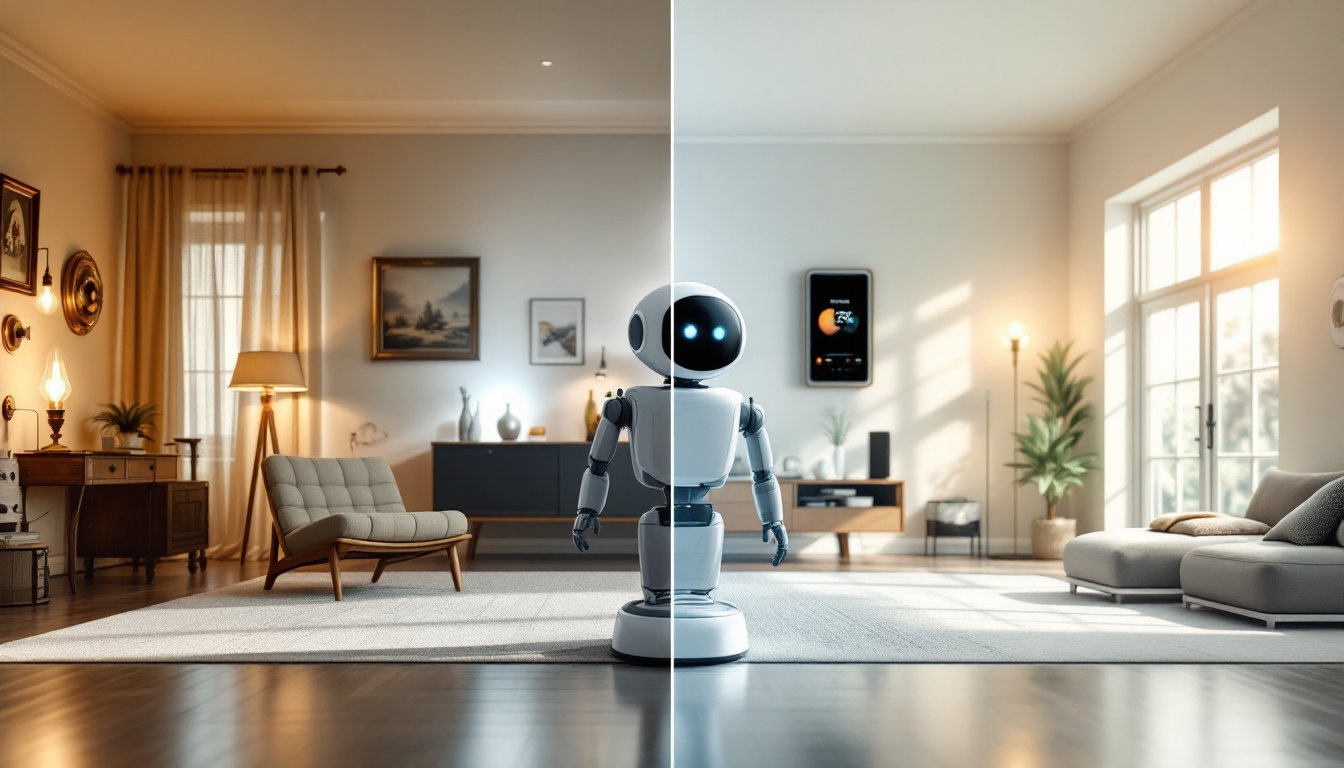
Today, machine learning and AI enable truly predictive, adaptive homes. Thermostats anticipate heating and cooling needs. Security systems distinguish between family members and strangers. Lighting adjusts based on time of day and occupancy. Integration platforms like Apple HomeKit, Amazon Alexa, and Google Home (along with open standards like Matter) are finally creating true interoperability, where devices from different manufacturers work seamlessly together.
Conclusion
From early thermostats and garage door openers to AI-powered predictive homes, home automation reflects broader technological and cultural shifts. The path wasn’t linear, competing standards, false starts, and overhyped products created friction along the way. But the underlying desire has remained constant: to make homes smarter, safer, and more responsive to the people who live in them. As connectivity, artificial intelligence, and interoperability continue improving, the smart homes of today are just the foundation for what comes next.