
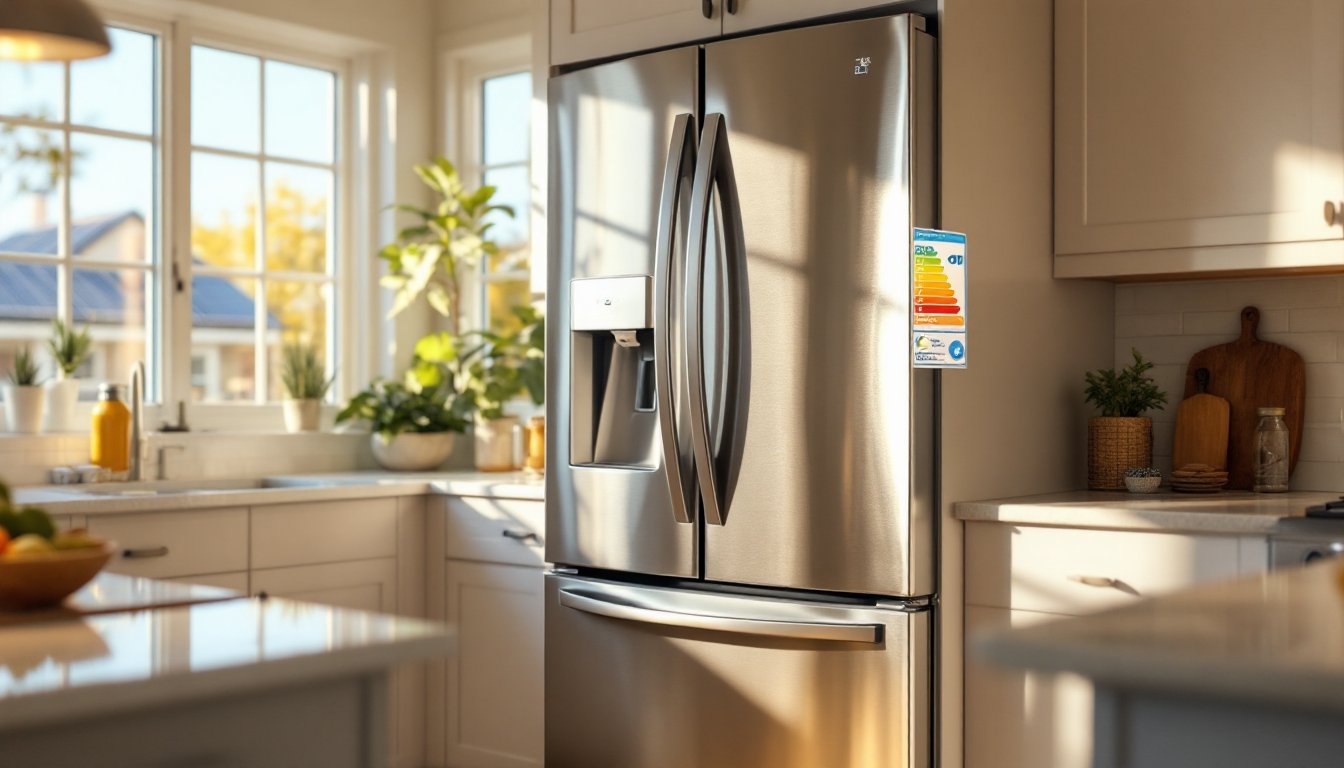

Homeowners replacing an older refrigerator often overlook one crucial detail: energy consumption. A standard refrigerator runs 24/7, making it one of the largest energy draws in any home, second only to heating and cooling systems. An Energy Star refrigerator cuts through that waste. These certified units use 10–50% less electricity than conventional models, depending on the type and age of your current appliance. For a homeowner, that translates to tangible savings on monthly utility bills plus reduced environmental impact. Whether you’re building a new kitchen or upgrading an aging appliance, understanding how energy-efficient refrigerators work and what they can save you is essential to making a smart investment.
Key Takeaways
- An Energy Star refrigerator cuts electricity consumption by 10–50% compared to conventional models, translating to $100–$300 in annual savings for most households.
- Energy Star certification is a federal standard requiring refrigerators to use at least 10–15% less energy than baseline models, verified through kilowatt-hour consumption testing.
- Homeowners replacing a refrigerator over 10 years old typically recoup the higher upfront cost of an Energy Star unit within 3–6 years through reduced utility bills.
- A single Energy Star refrigerator prevents approximately 9,000 pounds of carbon dioxide emissions over its lifetime, equivalent to removing a car from the road for one year.
- The yellow Energy Guide label on every refrigerator displays the estimated yearly operating cost, making it the fastest way to compare efficiency between units before purchasing.
- Proper maintenance—including cleaning condenser coils every 6–12 months and ensuring tight door seals—preserves the efficiency gains of your Energy Star investment.
What Makes a Refrigerator Energy Star Certified
Energy Star certification isn’t a marketing label, it’s a federal standard administered by the EPA and Department of Energy. A refrigerator earns Energy Star status by meeting strict efficiency requirements set against baseline models of the same type and size.
The certification process measures energy consumption (in kilowatt-hours per year) and compares it against a calculated standard. Top-freezer, bottom-freezer, side-by-side, and French-door refrigerators each have their own benchmarks because larger units naturally use more energy. A certified model must consume at least 10–15% less energy than the federal minimum standard, though many exceed that threshold significantly.
Key design features that help refrigerators earn this badge include improved insulation (thicker or higher-R-value foam), more efficient compressors, better door seals, advanced thermostat controls, and LED lighting instead of incandescent bulbs. High efficiency refrigerators also use variable-speed compressors that adjust cooling power based on actual demand rather than running at constant output. Evaporator fan motors in these units often run only when needed, rather than continuously.
When you shop, look for the yellow Energy Guide label on every new refrigerator, it displays the estimated yearly cost to operate that specific model. Comparing these labels side by side is one of the fastest ways to gauge real-world efficiency differences between units.
Key Benefits of Choosing an Energy Star Refrigerator
Lower Electric Bills and Long-Term Savings
The most immediate benefit of an energy-efficient refrigerator is lower electricity consumption, which shows up directly on your utility bill. A household replacing a 15-year-old refrigerator with an Energy Star model typically saves $15–$25 per month on electric costs, sometimes more, depending on local utility rates and the efficiency gap between old and new units.
Over a refrigerator’s typical 15–20-year lifespan, those monthly savings compound significantly. Homeowners often recoup the higher upfront cost of an energy-efficient unit (usually $100–$300 more than a baseline model) within 3–5 years through reduced electricity use. After that payback period, every year of operation is essentially free cooling. For a household with electricity costs of $0.14 per kilowatt-hour (the current US average), replacing a 1980s refrigerator with a modern energy-efficient model can save $300–$500 annually.
Money saved isn’t the only financial upside. Some states and utility companies offer rebates for purchasing Energy Star appliances, ranging from $25 to $200 depending on your region and the specific model. Check your local utility company’s website or the EPA’s Energy Star rebate finder to see what incentives apply to your area.
Environmental Impact and Carbon Footprint Reduction
Beyond personal savings, choosing an energy-efficient refrigerator reduces your household’s carbon footprint. The electricity grid still relies on fossil fuels in most regions: every kilowatt-hour saved means less coal, natural gas, or oil burned for power generation.
On average, an Energy Star refrigerator prevents approximately 9,000 pounds of carbon dioxide emissions over its lifetime compared to a standard unit. That’s equivalent to removing a car from the road for roughly one year. Multiplied across millions of households, the collective impact is substantial, the EPA estimates that Energy Star refrigerators alone have kept over 2.3 billion tons of carbon dioxide out of the atmosphere since the program’s inception.
If your home runs on renewable energy (solar panels, wind power, or a green utility plan), the environmental gain is even cleaner. But even on a conventional grid, the efficiency matters. A high efficiency refrigerator means your home uses less total energy, which reduces demand on local power infrastructure and lowers peak-load stress during hot summer months when air conditioning demand peaks.
How Much Energy and Money Can You Actually Save
Real-world numbers help clarify what Energy Star certification means in your wallet. Let’s use concrete examples.
A standard refrigerator from 1995 consumes roughly 800–900 kilowatt-hours per year. A modern Energy Star refrigerator of the same size and style consumes 400–500 kWh annually. At $0.14 per kWh, that’s a difference of roughly $56–$70 per month, or $672–$840 per year.
Not all households will see identical savings, your specific benefit depends on:
- The age and efficiency of your current refrigerator. Replacing a unit from the 1980s yields bigger savings than upgrading from a 2015 model.
- Refrigerator type. French-door and side-by-side models use more energy overall than top-freezer units, so absolute savings vary by style.
- Local electricity rates. Homeowners in California or the Northeast (higher rates) see larger dollar savings than those in regions with cheaper power.
- Your usage patterns. Frequent door openings, high ambient temperature (leaving the fridge in a garage without climate control), and blocked airflow around the unit all increase energy consumption.
A practical baseline: if you’re replacing any refrigerator more than 10 years old with an Energy Star model, expect to save between $100–$300 annually in electricity costs. For a unit older than 15 years, savings often exceed $400 per year.
When calculating your return on investment, factor in both the purchase price difference (Energy Star models typically cost $150–$400 more) and any available rebates. Most homeowners break even within 3–6 years, making the efficiency premium a legitimate financial decision, not just an environmental one.
One final note: real-world savings depend on proper maintenance. Clean the refrigerator’s condenser coils every 6–12 months, ensure door seals close tightly, and don’t block air vents inside the cabinet. These simple tasks preserve the efficiency gains that made the initial investment worthwhile.
Conclusion
An Energy Star refrigerator is a straightforward upgrade that delivers both immediate and long-term value. Lower electric bills, federal rebates, and reduced environmental impact make the efficiency premium a smart financial and ecological choice. By choosing a certified unit and maintaining it properly, homeowners invest in years of reliable, cost-effective cooling while reducing their household’s energy footprint.