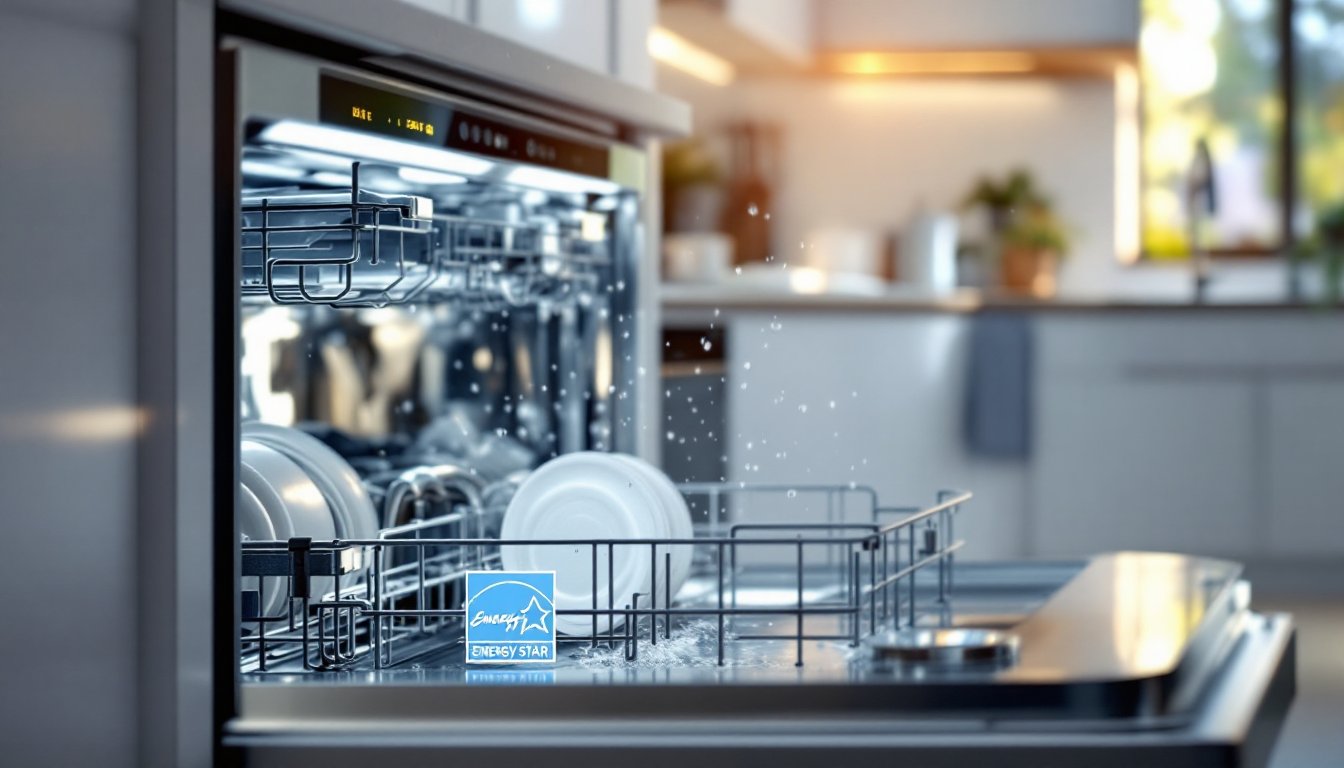

If a dishwasher runs in your kitchen daily, that appliance is one of your home’s biggest water and energy consumers. A standard dishwasher from ten years ago might use 27 gallons per cycle: a modern high efficiency dishwasher can cut that to 3–5 gallons while cleaning just as well. That’s not marketing, it’s engineering. Today’s high efficiency models have earned real certification from the EPA and DOE, and the savings add up fast. For homeowners who want to cut utility bills without sacrificing performance, understanding what makes these machines efficient is the first step toward a smarter purchase.
Key Takeaways
- A high efficiency dishwasher cuts water usage from 27 gallons per cycle to just 3–5 gallons while maintaining cleaning performance, reducing annual household water consumption by nearly 50%.
- High efficiency models save approximately $43–$150 per year on combined water and energy costs, paying back their higher upfront price in 3–5 years with cumulative savings of $1,000+ over a 10-year lifespan.
- EPA WaterSense and Energy Star certification ensures high efficiency dishwashers meet strict, measurable benchmarks including smart soil sensors, insulated tubs, and water recirculation systems that prevent waste.
- Key performance features like adjustable racks, specialized wash cycles, and delay-start timers allow you to maximize efficiency and fit your household’s specific cleaning needs.
- Most utility companies offer rebates of $50–$150 for Energy Star upgrades, and a modern high efficiency dishwasher can boost home resale value by signaling responsible stewardship to potential buyers.
What Makes a Dishwasher High Efficiency
High efficiency dishwashers meet strict EPA WaterSense and Energy Star standards. These aren’t vague claims, they’re measurable benchmarks.
At the core, high efficiency models use targeted spray arms and sensors that detect soil levels inside the wash chamber. Instead of flooding the tub with water and hoping for the best, these machines spray precisely where needed, then recirculate and filter that same water multiple times. Older machines dumped used water after each rinse: modern efficient models reuse it.
Material and build quality matter too. High efficiency dishwashers typically feature insulated tubs, usually stainless steel or composite materials, that maintain water temperature longer. This means the heating element doesn’t work overtime, reducing energy draw. The pump and motor are also engineered for efficiency, using less electricity to circulate water at the right pressure and flow rate.
You’ll also notice construction differences: durable racks with quiet glides, sturdy spray arms (not flimsy plastic), and sealed doors that prevent leaks. These details reduce waste and extend the machine’s lifespan, which is part of overall efficiency.
Water and Energy Savings You Can Expect
The numbers are concrete. A high efficiency dishwasher certified by Energy Star uses no more than 3 gallons per cycle, compared to the federal maximum of 5.8 gallons for standard models. Running one cycle daily for a year means the difference between roughly 1,100 gallons and 2,100 gallons, a 48% reduction.
Energy consumption follows the same pattern. High efficiency models consume around 1.45 kWh per cycle or less. A household running one load daily might use 529 kWh annually with an efficient model versus over 800 kWh with an older standard machine. At the U.S. average electric rate of roughly 16 cents per kWh (as of early 2026), that’s a difference of about $43 per year in electricity alone.
Water heating also factors in. If you use hot water for your dishwasher, heating accounts for a significant portion of energy cost. High efficiency models heat water more effectively and use less of it, compounding savings. Over a 10-year appliance lifespan, a single household might save 5,000+ gallons of water and $400–$600 in combined water and energy costs compared to running an older dishwasher.
Key Features That Boost Performance
Advanced Wash Cycles and Smart Technology
Modern high efficiency dishwashers don’t just spray and hope. They come with specialized cycles tailored to what you’re washing. A dedicated glassware cycle uses gentle pressure and lower temperatures to protect delicate items. A heavy-soil or pot-scrubber cycle cranks up the water pressure and temperature for baked-on food. Many machines include a quick wash (30–45 minutes) for lightly soiled dishes, which uses less water and energy than a full cycle.
Smart technology is increasingly standard. Soil sensors scan the water opacity during the wash and adjust cycle length and water volume on the fly. If dishes are clean partway through, the machine stops rather than running a full preset time. This adaptive approach cuts waste significantly.
Other efficiency boosters include adjustable racks (so you fit more items per load, reducing the number of cycles you run), delay-start timers (so you can run loads during off-peak utility hours if your region offers time-of-use pricing), and filtration systems that trap food particles, allowing water reuse throughout the cycle.
Thermo-insulated tubs and quiet operation often come together: the insulation dampens noise and keeps water hot, reducing the energy needed for reheating. You get a quieter kitchen and lower bills in one upgrade.
Financial Benefits and Long-Term Savings
The upfront cost of a high efficiency dishwasher is higher than a bargain-basement model, typically $600–$1,200 for a solid mid-range Energy Star unit versus $400–$700 for a basic model. But the payback period is shorter than many homeowners assume.
If you save $100–$150 annually on water and energy (a conservative estimate for active households), the difference in purchase price ($300–$500) pays for itself in three to five years. After that, the high efficiency machine is running nearly for free in terms of utility savings. And if you stay in your home longer than ten years, the accumulated savings become substantial, easily $1,000 or more over the appliance’s typical 10–12 year lifespan.
There are also indirect financial benefits. Some utility companies and municipalities offer rebates or incentives for upgrading to Energy Star appliances, sometimes $50–$150. Check your local water authority or electric company, programs vary by region and change annually. These rebates can chip $100+ off the purchase price, shortening payback even more.
Resale value is harder to quantify, but modern high efficiency appliances are seen as desirable by home buyers, particularly in regions with high water costs (California, Arizona, the Northeast). An outdated, inefficient dishwasher might flag a kitchen as behind the times, while a recent Energy Star model signals responsible stewardship.
Choosing the Right High Efficiency Dishwasher
Start by confirming your rough budget and kitchen layout. Most dishwashers fit a 24-inch standard opening (the actual interior width is about 22.5 inches). Some compact 18-inch models exist, and commercial or deep-capacity units run 30+ inches, but they’re less common in residential kitchens.
Next, prioritize features that matter to your household. If you load a lot of pots and have tight, grimy cookware, a powerful soil sensor and dedicated heavy-wash cycle are worth the cost. If you mostly run lightly soiled glasses and plates, a simpler high efficiency model (fewer specialty cycles) will save just as much water and energy at a lower price.
Check the decibel rating if noise is a concern. Energy Star models typically run 38–45 dB: premium quieter units go below 38 dB. This matters if your kitchen is open to living spaces. Also, verify whether the unit fits your kitchen’s cabinetry and plumbing. Rough-in dimensions vary, some models are shallow-depth (for kitchens with space constraints), while others are standard 24 inches front-to-back.
Review the warranty. Most reputable high efficiency models come with a three-year parts warranty and a one-year labor warranty. If a unit is significantly cheaper than competitors, check the warranty terms, thin coverage often means cut corners elsewhere.
Finally, confirm water and energy guides on the label. Every dishwasher sold in the U.S. has an EnergyGuide label showing estimated annual energy and water costs based on standard use. Compare these numbers directly across models: they’re calculated the same way, so the comparison is fair.
Conclusion
A high efficiency dishwasher is a practical upgrade that pays for itself through water and energy savings. The technology is proven, reliable, and now standard across most mid-range and premium models. If your current dishwasher is more than 10 years old, switching to high efficiency isn’t just an eco-friendly choice, it’s a smart financial move that puts cash back in your pocket every month. Start by comparing Energy Star models in your budget range, confirm the dimensions fit your kitchen, and check for available rebates. The rest takes care of itself.