
The AOSU doorbell camera has emerged as a solid option for homeowners looking to upgrade their front-door security without very costly. As smart home devices become more essential to daily life, having a reliable video doorbell that delivers clear footage and intelligent alerts can make a real difference in home safety. This review takes a practical look at what the AOSU doorbell camera offers, its strengths, limitations, and whether it’s the right fit for your security setup. Whether you’re protecting packages, monitoring guests, or simply keeping an eye on comings and goings, understanding this device’s capabilities will help you make an well-informed choice.
Key Takeaways
- The AOSU doorbell camera offers budget-friendly home security with wireless installation and 1080p HD video, making it an accessible entry point for homeowners without complex wiring requirements.
- Two-way audio communication and customizable motion detection allow you to monitor your front entrance in real time and reduce false alerts from passing vehicles or pets.
- While the AOSU doorbell camera delivers reliable daytime footage and a wide 160-degree viewing angle, night vision in IR mode produces grainy black-and-white images and works best in pre-lit areas.
- Battery life typically lasts 2–4 months between charges, but can drain faster in cold weather or high-traffic zones with frequent motion detection activity.
- Cloud storage for video clips requires a subscription after the free trial period, and the plastic build may not be fully tested for durability under extreme weather conditions.
- The AOSU doorbell camera is worth considering if you’re comfortable with trade-offs like lower resolution compared to premium brands and are seeking a cost-effective smart doorbell solution.
What Is The AOSU Doorbell Camera?
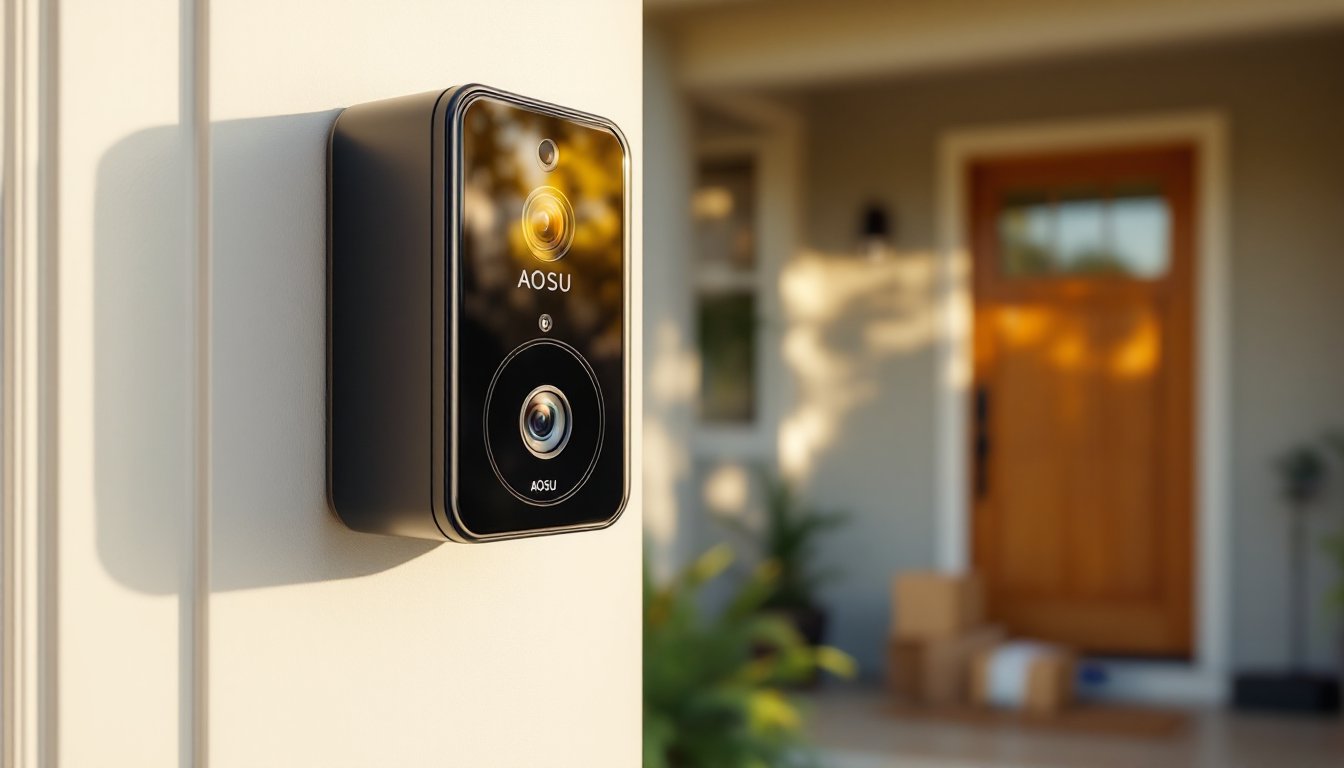
The AOSU doorbell camera is a wireless video doorbell designed to replace a traditional doorbell button at your front entrance. Unlike standard doorbells, it captures video footage, sends live alerts to your smartphone, and lets you communicate with visitors remotely. It’s mounted directly above your door frame where a conventional doorbell sits, making installation straightforward for most homeowners, no complex rewiring required on most units.
This device functions as both a visual security layer and a two-way communication tool. When someone approaches your door, the camera detects motion, records video, and pushes a notification to your phone in real time. You can then see who’s there, speak to them through the built-in speaker and microphone, and decide whether to open the door or take action. For renters or those without existing wired doorbell infrastructure, wireless models like AOSU offer flexibility since they’re battery-powered and don’t depend on your home’s electrical system.
Key Features And Specifications
Video Quality And Night Vision
The AOSU doorbell camera delivers 1080p HD video, which is the baseline standard for modern video doorbells. This resolution provides clear enough footage to identify faces and read package labels during daylight hours. The camera includes a wide viewing angle of approximately 160 degrees, letting you capture the entire porch and parts of the walkway without blind spots.
Night vision is handled by infrared (IR) LEDs, enabling the camera to record in low-light conditions and complete darkness. But, infrared footage appears in black and white, and visibility can be grainy compared to daytime video. If your porch has existing lighting, you’ll get better night results: poorly lit areas will show degraded clarity. The camera also includes a spotlight or light feature on some models, which aids visibility and can deter unwanted visitors.
Smart Detection And Alerts
The AOSU doorbell uses motion detection to trigger notifications when someone approaches your door. You can customize detection zones and sensitivity levels through the mobile app, reducing false alerts from passing cars or wandering pets. More advanced models include person detection, which distinguishes humans from other motion sources, a useful filter if you have animals on your property.
When the doorbell detects activity, it sends a push notification to your smartphone within seconds, and you can view a live feed on demand. Two-way audio lets you speak and listen through the integrated speaker and microphone. Some AOSU models also support cloud storage for video clips, though storage costs may apply after a trial period. Local storage via SD card is available on certain versions, giving you an offline backup option.
Installation And Setup Process
Installing the AOSU doorbell camera is one of its biggest selling points, most users can finish in 20–30 minutes without professional help. Start by turning off power to your existing doorbell at your home’s breaker box (if it’s wired) or remove batteries from wireless models. Remove the old doorbell button and check the mounting surface: it should be clean and free of paint, dirt, or debris. Wipe with a damp cloth and let it dry completely.
Most AOSU models are battery-powered, so the main installation step is positioning the mounting bracket and securing it with the provided screws. Drill pilot holes if needed to prevent the wall from cracking. Slide the camera unit into the bracket and tighten the screws snugly, don’t over-torque, as plastic mounts can crack. Once physically mounted, insert or charge the batteries (depending on the model) and power it on.
The smartphone setup comes next. Download the AOSU app, create an account, and scan the QR code on the doorbell (usually on the back of the unit). The app will walk you through connecting the camera to your 2.4GHz WiFi network, dual-band routers work fine, but the doorbell only connects to the 2.4GHz band. Enter your WiFi password, wait for the camera to join the network (usually 1–2 minutes), and test the live feed. Customize motion zones, alert sensitivity, and notification preferences in the app settings.
Note: If your doorbell requires hardwiring (some models offer both battery and wired options), you’ll need to locate your doorbell wires and connect them to the terminals on the camera base. This typically means removing the old transformer’s wires and connecting them to the AOSU unit, a basic task, but if you’re uncomfortable with electrical work, hire a licensed electrician. Check local codes: some jurisdictions require permits for doorbell modifications.
Pros And Cons
Advantages:
- Easy wireless installation with no complex wiring or professional setup required.
- Affordable price point compared to premium brands like Ring or Logitech.
- 1080p video and wide viewing angle capture most relevant front-door activity.
- Two-way audio allows real-time communication with visitors.
- Customizable motion detection and alerts reduce notification fatigue.
- Battery-powered convenience with reasonable battery life (typically 2–4 months between charges).
- Mobile app is generally intuitive and responsive.
Disadvantages:
- 1080p is functional but not ultra-sharp: 2K or 4K models offer better detail for identifying faces at distance.
- Night vision in IR mode produces grainy black-and-white footage, especially in complete darkness.
- Cloud storage typically requires a subscription after a free trial period.
- Battery drain can be faster in cold weather or high-traffic areas with constant motion detection.
- No integration with older smart home platforms (limited compatibility with some ecosystems).
- Customer support responsiveness varies: some users report slow response times.
- Build quality feels plastic: durability under extreme weather (heavy rain, intense heat) is not fully tested long-term.
Conclusion
The AOSU doorbell camera delivers solid value for budget-conscious homeowners seeking basic video doorbell security. Its straightforward installation, reliable motion detection, and two-way communication make it a practical choice for monitoring your front entrance and communicating with visitors remotely. While it won’t match premium models in video resolution or advanced AI features, it handles everyday security tasks competently. If you’re comfortable with the trade-offs, lower resolution, grainy night vision, and potential subscription costs, the AOSU is worth considering as a cost-effective entry point into smart doorbell technology.