
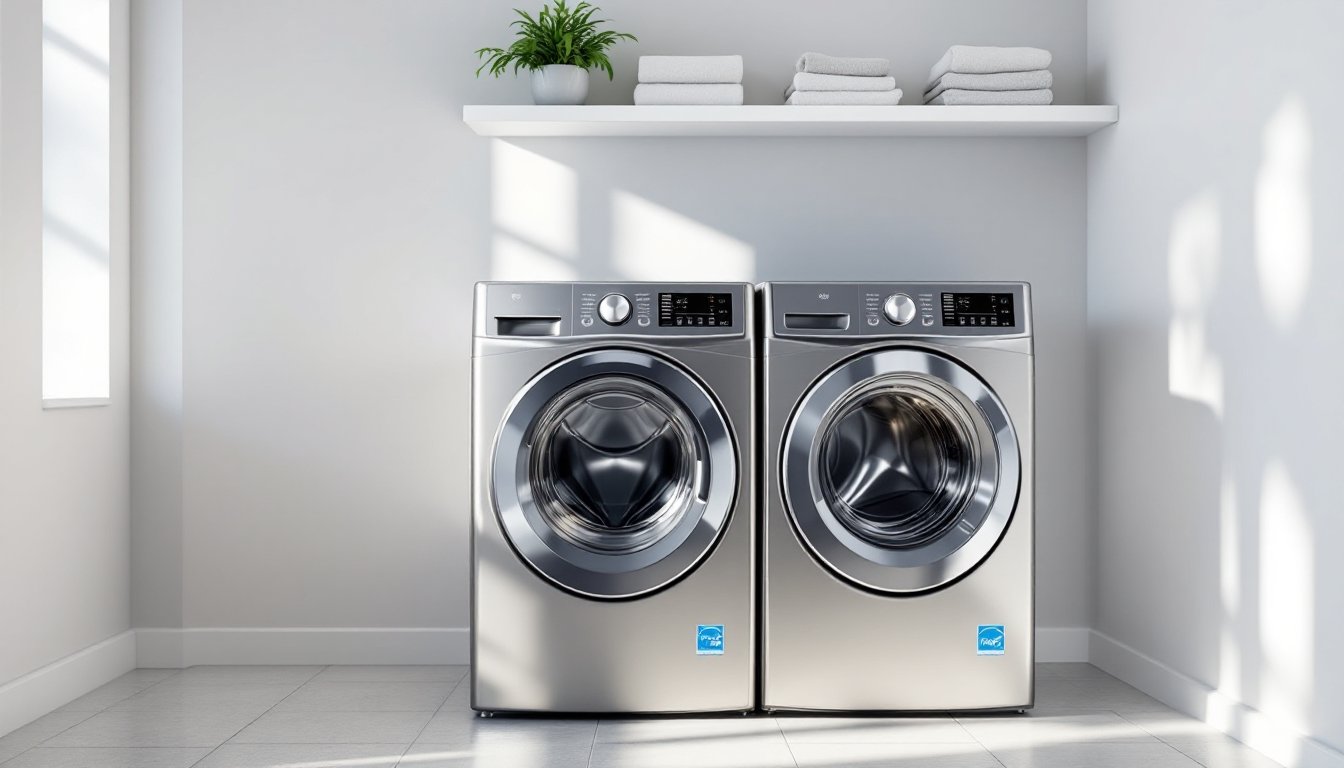

When a washer or dryer breaks down, most homeowners simply replace it with the cheapest option available. But that approach costs far more over time. Energy Star certified washers and dryers have become the practical choice for anyone serious about reducing utility bills and water consumption. In 2026, these appliances aren’t luxury purchases, they’re smart investments that pay for themselves through lower operating costs while consuming significantly less energy and water than standard models. Understanding how they work and what they can save makes the upgrade decision straightforward for any budget-conscious household.
Key Takeaways
- Energy Star washers and dryers use roughly one-third less water and 25-50% less energy than standard models while maintaining the same cleaning and drying performance.
- An Energy Star washer and dryer investment typically pays for itself within 10-14 years through combined water and electricity savings of approximately $114 annually, with payback accelerated by utility rebates.
- Energy Star certification ensures appliances meet strict EPA and Department of Energy efficiency standards verified through independent testing, qualifying purchases for utility rebates between $50-$400.
- Front-load and high-efficiency top-load washers clean effectively by tumbling clothes through shallow water or using jet-spray systems instead of traditional soaking methods, reducing water consumption from 40-50 gallons to 10-20 gallons per cycle.
- Heat pump dryers, while costing $400-$1,000 more upfront than vented models, use 40-50% less energy and achieve full payback in 10-15 years, making them ideal for homeowners staying long-term.
- Energy Star washers and dryers often include advanced features like moisture sensors, smart connectivity, variable spin speeds, and automatic detergent dispensers that maximize efficiency without being essential for ROI.
Why Energy Star Certification Matters
Energy Star certification isn’t just a marketing label. The program, run by the EPA and Department of Energy, sets strict efficiency standards that appliances must meet through independent testing. A washer or dryer carrying the Energy Star badge consumes significantly less energy and water than federal minimum standards require.
For washers, Energy Star models must score lower on the Integrated Water Factor and Modified Energy Factor tests. For dryers, they must meet specific energy consumption thresholds measured in kilowatt-hours per load. These aren’t vague claims, manufacturers submit third-party test data before any product can display the label.
Why does this matter to a homeowner? First, it ensures the appliance will actually perform as advertised. Second, it qualifies the purchase for utility rebates in many regions. Some states and local utilities offer $50 to $400 rebates specifically for Energy Star washers and dryers. Combining manufacturer discounts with utility incentives can significantly reduce out-of-pocket costs. Also, Energy Star appliances often come with longer warranties and better resale value than standard models, making them genuinely better long-term investments.
How Energy Star Washers Save Water and Energy
Traditional top-load washers use a full tub of water for each cycle, often 40-50 gallons. Energy Star front-load washers and high-efficiency top-load models use 10-20 gallons per cycle. That’s not because they clean worse, it’s because the drum design and water pressure are engineered more intelligently.
Front-load machines tumble clothes through a shallow water pool rather than soaking them. High-efficiency top-loaders use impeller or jet-spray systems that force water through the load instead of simply filling a tub. Both approaches clean clothes effectively while using roughly one-third the water.
Energy savings come from two places: less water to heat and more efficient motor design. When a machine uses less water, the water heater works less hard. Energy Star washers also use intelligent sensors that detect load size and soil level, adjusting water and energy consumption accordingly. Some models even reuse rinse water from previous cycles.
Advanced Washing Technologies
Many 2026 Energy Star washers include features that weren’t common just five years ago. Stainless steel drums resist corrosion and reduce friction, allowing faster spin cycles that extract more water before drying begins. Variable spin speeds adjust based on fabric type, preventing damage to delicate items while maximizing extraction on heavy loads.
Smart connectivity lets homeowners start cycles remotely, receive alerts when a load finishes, and track water and energy consumption in real time. Some models include automatic dispensers that release detergent at precise points in the wash cycle, using only the amount needed.
While these features add cost, the primary savings, water and energy reduction, happen with the basic high-efficiency design. Advanced features are convenient but not essential for delivering ROI.
The Benefits of Energy Star Dryers
Energy Star dryers fall into two categories: traditional vented models with improved efficiency and heat pump dryers that operate on a completely different principle. Both use significantly less energy than older standard dryers.
Vented dryers are still the most common option. Energy Star versions use larger-diameter ducts, better insulation, and moisture sensors that detect when clothes are dry and shut the cycle off automatically. This prevents the energy waste of over-drying, which is one of the biggest culprits in inefficient dryer operation. Standard dryers often run for the full programmed time even after clothes are completely dry.
The estimated energy use for a standard electric dryer runs 700-800 kilowatt-hours per year. An Energy Star vented model typically uses 500-550 kWh annually. At an average residential electricity rate of $0.16 per kWh, that difference equals roughly $40-50 per year on dryer costs alone.
Heat Pump and Sensor Dry Features
Heat pump dryers are the efficiency champions. Instead of generating heat by running electric resistance coils continuously, they use a compressor to move heat from outside air into the drum. The process is slower, a heat pump dryer takes 45 minutes to an hour versus 30-40 minutes for a vented model, but it uses 40-50% less energy because it recycles heat rather than venting it outside.
Heat pump dryers cost more upfront, typically $1,200-$1,800 versus $500-$800 for a standard vented model. But, annual energy savings of $60-$100 mean the premium recouped in 10-15 years. They’re ideal for anyone staying in their home long-term or living in a region with higher electricity costs.
All Energy Star dryers include moisture sensors that monitor fabric and stop the cycle when clothes reach the target dryness level. This prevents the energy waste of continued heating after garments are already dry. Some models offer “wrinkle guard” cycles that tumble clothes at intervals for several hours after drying finishes, holding clothes gently without heat. This feature reduces the need to run a separate wrinkle-release cycle, saving additional energy.
Long-Term Savings and ROI
A typical household uses their washer and dryer 5-8 times per week. That’s 260-400 load cycles annually. Even small per-load savings compound dramatically over time.
Consider a concrete example: replacing a 15-year-old washer and standard electric dryer with Energy Star models. The old washer uses 55 gallons per load: the new Energy Star front-loader uses 12 gallons. At an average residential water rate of $3 per 1,000 gallons and typical sewer charges adding $3 per 1,000 gallons, each load saves roughly $0.26 in water and sewer costs. Over 300 annual loads, that’s $78 per year in water savings alone.
The old dryer uses 750 kWh annually: the new Energy Star vented model uses 525 kWh. At $0.16 per kWh, the annual electricity saving is $36. Combined water and electricity savings total $114 per year.
Entire-unit cost varies widely by region, capacity, and features. A mid-range Energy Star washer costs $600-$900: a comparable dryer runs $500-$700. Total installed cost is roughly $1,200-$1,600. With $114 annual savings, payback occurs in 10-14 years, well before either appliance reaches end-of-life (usually 10-15 years for washers, 13-17 years for dryers).
Adding utility rebates ($50-$300 combined in many areas) shortens payback to 8-12 years. Many homeowners also factor in reduced water heater strain, lower detergent consumption with efficient washers, and improved fabric longevity from gentler wash and dry cycles. While harder to quantify, these secondary benefits add real value over time.
Conclusion
Energy Star washers and dryers represent straightforward efficiency. They clean and dry clothes just as effectively as standard models while using one-third less water and 25-50% less energy. The upfront cost premium is recouped within a decade through lower utility bills, often faster with available rebates. For any homeowner replacing aging appliances or building a more efficient home, Energy Star certification is the practical, money-saving choice in 2026.