
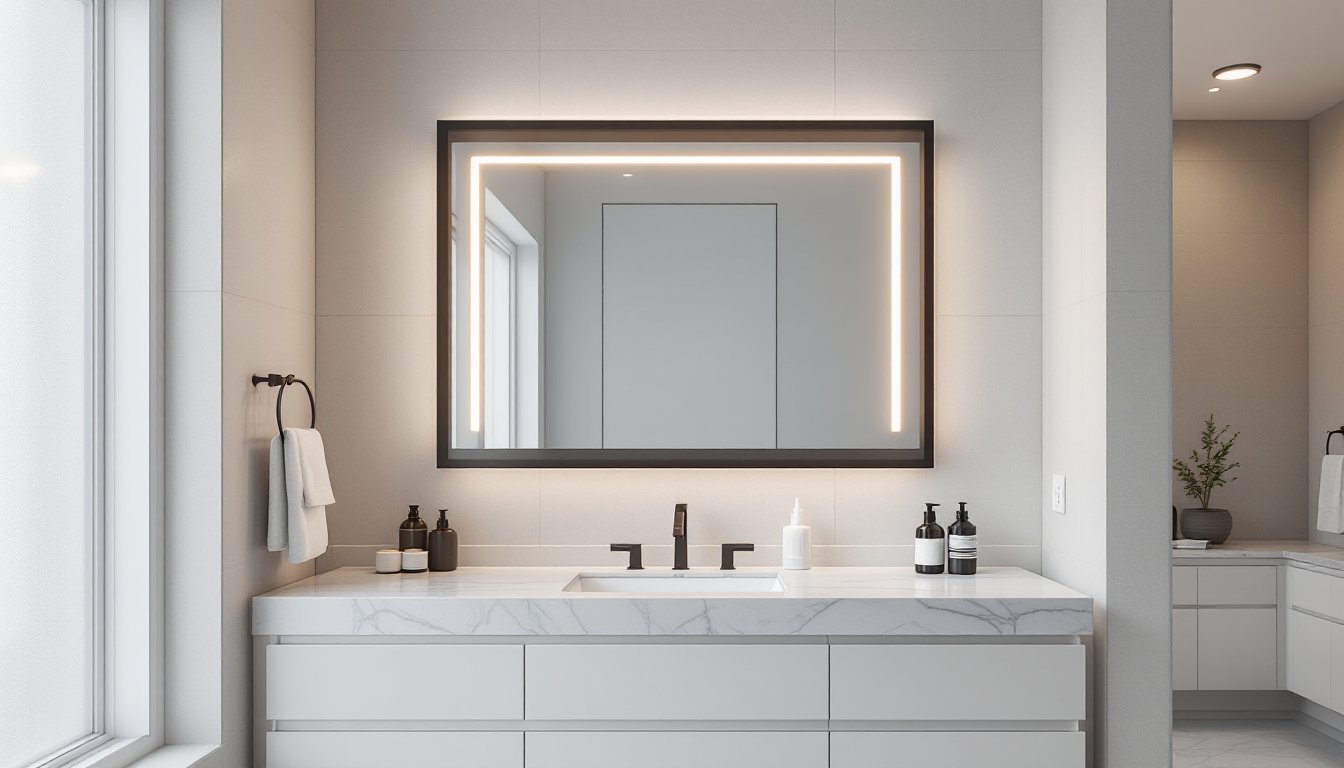

A bathroom vanity mirror with lights has become far more than a luxury, it’s now standard in modern homes. Whether you’re renovating a master bath or upgrading a powder room, a lighted vanity mirror combines functionality with contemporary style. The right fixture provides task lighting for grooming, improves visual clarity, and enhances the overall aesthetic of the bathroom. Today’s options range from simple LED strips to full-featured smart mirrors with integrated technology. Understanding the key features, installation methods, and maintenance requirements will help you choose the perfect mirror and avoid costly mistakes.
Key Takeaways
- A bathroom vanity mirror with lights eliminates unflattering shadows by positioning light at eye level, providing even illumination for grooming and enhancing your entire bathroom aesthetic.
- LED bathroom mirrors consume up to 80% less electricity than incandescent bulbs while lasting 15,000–50,000+ hours, making them an energy-efficient upgrade that lowers utility costs.
- Choose mirrors with full-spectrum or cool white LEDs (4000K–5000K color temperature) and high-CRI ratings of 90+ to ensure accurate color rendering for makeup and skincare routines.
- Most bathrooms need 400–800 lumens of brightness with adjustable settings; 30–48 inch mirrors require 600+ lumens while smaller fixtures work with less output.
- Surface-mount installation suits DIY projects, but recessed bathroom vanity mirror setups require a licensed electrician and often a permit to ensure code compliance and safety.
- Smart features like Bluetooth speakers, defogging, and voice control enhance daily routines, but prioritize durability and simplicity if connectivity features risk adding maintenance hassles.
Why LED Bathroom Mirrors Are Essential for Modern Bathrooms
Traditional bathroom mirrors with overhead lighting often create unflattering shadows across the face, a problem that integrated vanity mirror lighting solves directly. LED bathroom mirrors position light sources at eye level, eliminating dark patches and providing even, flattering illumination for shaving, makeup application, and skincare routines. Beyond aesthetics, LED bathroom mirrors are energy-efficient, using up to 80% less electricity than incandescent bulbs while lasting 15,000 to 50,000 hours or more. They generate minimal heat, making them safer and reducing strain on bathroom ventilation systems. Modern homeowners also appreciate that LED mirrors align with sustainability goals while lowering utility costs over time. The combination of task lighting precision, energy savings, and design flexibility makes LED bathroom mirrors a practical upgrade that pays dividends daily.
Key Features to Look For When Choosing a Lighted Vanity Mirror
LED Technology and Energy Efficiency
Not all LED mirrors perform equally. Look for full-spectrum or cool white LEDs (4000K–5000K color temperature), which most closely mimic natural daylight and reveal true skin tones. Some premium mirrors offer adjustable color temperature, letting you shift between warm (2700K) for evening relaxation and cool (5000K+) for morning preparation. Verify that the mirror uses high-CRI (color rendering index) LEDs rated 90 or above, this ensures colors appear accurate under the light. Energy consumption matters too: quality mirrors draw between 20–40 watts depending on size and brightness. Check for integrated dimming controls, whether touch sensors, wall switches, or app-based, so you can adjust output without wasting power on constant full brightness.
Brightness Levels and Color Temperature Options
Brightness is measured in lumens, not wattage. A typical bathroom vanity mirror should deliver 400–800 lumens, enough to illuminate the face without glare. Mirrors spanning 30–48 inches wide generally need 600+ lumens: smaller mirrors can work with less. Adjustable brightness is crucial, morning grooming requires full intensity, while evening touchups benefit from softer light. Some mirrors offer three-temperature settings (warm, neutral, cool) allowing you to match different times of day or personal preference. Premium models let you save custom presets, so the mirror remembers your preferred settings. When evaluating options, don’t rely solely on manufacturer specs, read reviews mentioning real-world brightness and whether the light feels natural or harsh in actual bathrooms.
Popular Installation Styles and Sizes
Bathroom vanity mirrors come in three primary installation configurations. Recessed mirrors mount flush within the wall, requiring rough framing before drywall installation, and offer a seamless, built-in look. This approach demands structural planning, electrical work inside wall cavities, and usually a licensed electrician, making it best suited for new construction or major renovations. Surface-mount mirrors fasten directly to finished walls with brackets or adhesive backing. These are the most accessible for DIY installation and work with existing electrical outlets via cord-fed connectors. Illuminated bathroom vanity mirror frames with integrated LED strips around the perimeter are popular for modern aesthetics and provide ambient plus task lighting. About size, standard vanity widths range from 24 inches for powder rooms to 48–60 inches for double-sink setups. Height typically spans 24–36 inches, though elongated rectangular mirrors trending in 2026 designs push toward 40+ inches. Before purchasing, measure your vanity opening and surrounding wall space, oversized mirrors create awkward proportions, while undersized fixtures look skimpy. Check wall clearance above and beside the sink for pendant lights or sconces that may interfere with a recessed mirror installation.
Smart Features That Enhance Daily Routines
Today’s premium bathroom vanity mirrors increasingly integrate smart technology. Built-in Bluetooth speakers let you stream music or podcasts during morning routines, though verify waterproof ratings (IPX4 or higher) since bathrooms produce moisture. Defogging features use heated backing or specialized coatings to prevent mirror condensation, a huge quality-of-life upgrade in humid bathrooms. Integrated magnification sections (typically 5x or 10x) built into corner panels aid makeup application and close-up grooming without requiring a separate hand mirror. Voice-activated brightness control via Alexa or Google Home appeals to tech-savvy users, though these systems require WiFi stability and may introduce privacy concerns. Color-changing LED modes (white, warm, or custom hues) serve both functional and mood-setting purposes. Before splurging on smart features, honestly assess whether you’ll use them, a reliable, durable mirror with simple touch-dimming often outperforms a feature-packed unit with connectivity headaches. Many smart mirrors require professional setup: factor installation time and cost into your budget.
Maintenance Tips for Long-Lasting Performance
Proper care extends the lifespan of any bathroom vanity mirror with lights. Keep electrical connections dry, use caulk around wall-mounted units to prevent moisture creep into wiring. Wipe mirrors weekly with a lint-free microfiber cloth and mild glass cleaner: avoid harsh chemicals or abrasive pads that scratch the reflective surface. For mirrors with integrated magnification or special coatings, use only manufacturer-approved cleaners to preserve finishes. Check for condensation pooling around the frame, if moisture collects, it signals poor ventilation or defective seals: run the exhaust fan during and 20 minutes after showers. Inspect LED strips or bulbs annually for dimming or color shifts: most quality mirrors allow individual LED replacement without removing the entire unit, though some proprietary systems require factory service. If your mirror has touch sensors, clean the control surface gently, dirt buildup reduces responsiveness. Finally, keep the wall outlet circuit dedicated to the mirror when possible, avoiding overloading with hair dryers or other high-draw appliances that might trigger breaker trips or voltage fluctuations affecting LED performance.
Installation Considerations and When to Call a Pro
Surface-mount mirrors suit confident DIYers with basic electrical knowledge. Turn off power at the breaker, use a stud finder to locate wall studs for mounting brackets, and follow manufacturer templates precisely, off-center placement ruins the finished look. Pre-drill holes to prevent cracking, use corrosion-resistant fasteners in moisture-prone bathrooms, and secure all connections before powering back on. Recessed installations almost always require a licensed electrician and possibly a permit, depending on your jurisdiction’s electrical codes. Never run high-voltage wiring through walls yourself if you’re uncertain. If your bathroom lacks a dedicated outlet nearby, running new circuit wiring or installing a GFCI-protected outlet becomes necessary, code violations create safety hazards and complicate future sales. Professional installation typically costs $200–600 but ensures compliance and peace of mind.