
Monster Energy refrigerators are purpose-built coolers designed to showcase and chill Monster brand energy drinks at retail, hospitality, and commercial locations. Unlike standard beverage coolers, these units combine cold storage with eye-catching branded graphics that turn the refrigerator into a walking advertisement. Whether someone runs a convenience store, gas station, or convenience-focused venue, understanding what a Monster Energy refrigerator offers, and how to choose, install, and maintain one, makes all the difference in keeping inventory fresh and driving sales. This guide walks through the essentials of Monster Energy refrigerators in 2026, from their core features to practical maintenance tips.
Key Takeaways
- A Monster Energy refrigerator is a commercial-grade branded cooler that combines cold storage with eye-catching graphics, typically holding 100–300+ cans while serving as a point-of-sale marketing asset in retail environments.
- Monster-branded coolers positioned in high-traffic areas like checkout lanes and convenience store entrances can drive 10–20% more sales compared to standard clear-door coolers.
- Proper placement requires a dedicated electrical circuit away from direct sunlight and heat sources, with 4–6 inches of ventilation clearance behind and above the unit to prevent compressor overwork.
- Regular maintenance including monthly condenser coil cleaning, weekly door sanitation, and quarterly temperature sensor checks will keep your Monster Energy refrigerator running reliably for 5+ years.
- Ideal capacity selection depends on daily sales volume: move 30–50 cans per day, aim for at least 300-can capacity; high-volume locations should consider 500+ can models.
- Maintaining consistent 35–38°F temperatures, practicing FIFO stock rotation, and keeping the cooler fully stocked directly impact product freshness and customer impulse purchases.
What Is a Monster Energy Refrigerator?
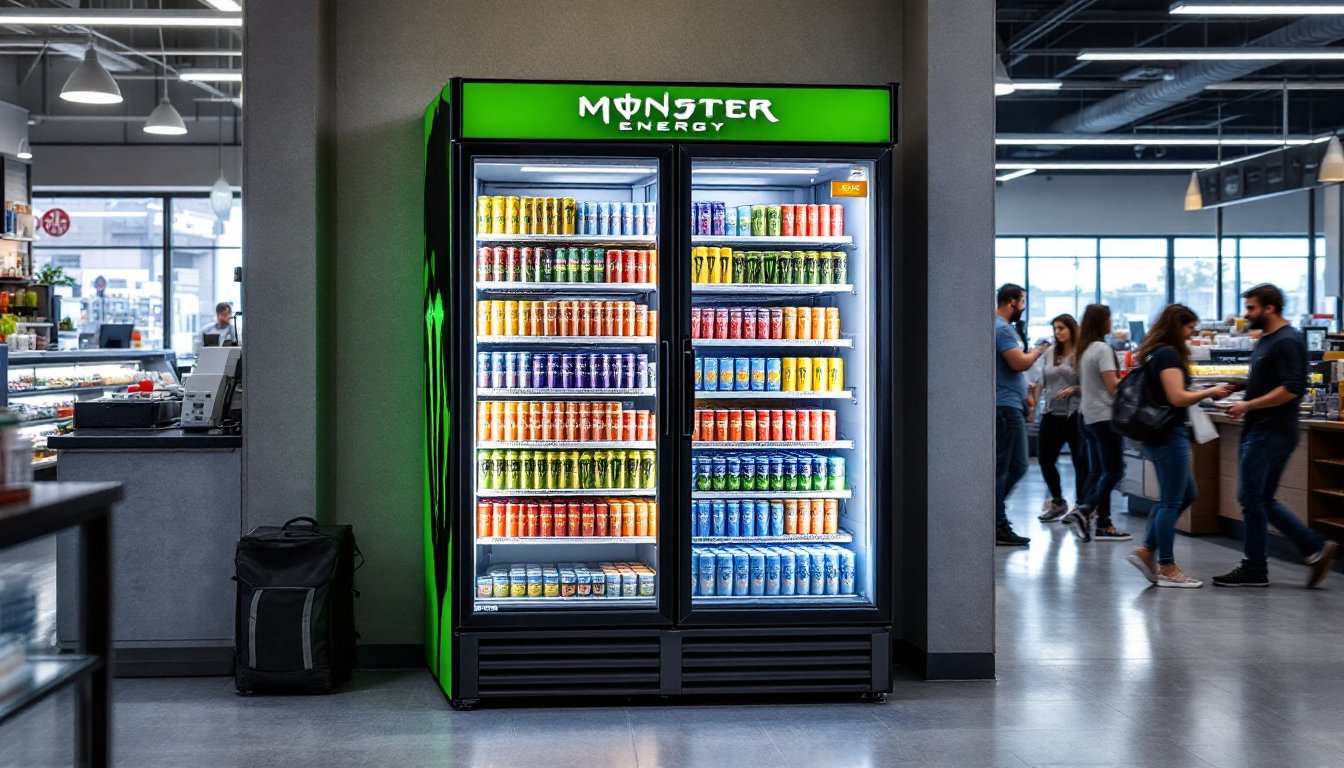
A Monster Energy refrigerator is a commercial-grade beverage cooler branded with Monster’s iconic green and black aesthetic. These units are typically glass-door coolers (often called reach-in display refrigerators) designed to hold 100–300+ cans or bottles, depending on size. The refrigerator’s exterior is wrapped or printed with Monster branding, transforming it into a point-of-sale display that catches customer attention while keeping beverages at optimal serving temperature, usually between 35°F and 38°F.
They differ from standard beverage coolers in two key ways: first, the branded exterior reinforces the product line and creates a memorable brand presence, and second, Monster often provides them at cost (or subsidizes them) to retailers as part of distribution agreements. The cooler isn’t just a storage tool, it’s a marketing asset that encourages impulse purchases.
Key Features and Design Elements
Monster Energy refrigerators pack practical features designed for high-traffic retail environments. Most units feature tempered glass doors that allow customers to browse without opening them, reducing energy loss and keeping the display clean. The shelving is typically adjustable, accommodating different can sizes and bottle heights. Standard dimensions range from 27 to 36 inches wide, 20 to 24 inches deep, and 60 to 70 inches tall, sized to fit snugly against a wall or in a retail corner without dominating floor space.
Temperature controls are straightforward: a thermostat dial or digital display lets staff adjust cooling within a narrow range. Most units operate on standard 115V or 208V electrical circuits (check your location’s supply before installation). Interior LED lighting illuminates the contents and highlights the branded design, making chilled cans virtually glow under store lights.
Energyefficiency has improved in recent models. Look for units with high-density insulation and tight-sealing door gaskets to minimize compressor runtime. Some newer units include night-mode settings that reduce lighting during off-hours, cutting energy costs without sacrificing product safety.
Branded Aesthetics and Visibility
The wrapped or printed exterior is where Monster’s branding strategy lives. High-contrast green and black graphics, combined with the Monster claw logo, create instant brand recognition. The design isn’t static, Monster rotates limited-edition graphics seasonally or for product launches, giving retailers fresh visual appeal. Placement matters: the cooler works best in high-traffic areas like checkout lanes, convenience store entrances, or near gas pump cashier stations, where it catches eyes during decision moments. The visual appeal directly correlates with sales lift: retailers report that Monster-branded coolers move 10–20% more units than standard clear-door coolers in the same location.
Best Uses and Ideal Settings
Monster Energy refrigerators thrive in retail and hospitality environments where impulse buying drives revenue. Convenience stores, gas stations, and quick-serve restaurants are obvious candidates, these venues have constant foot traffic and limited shelf space, making a branded cooler an efficient inventory solution. Vending and licensing agreements often come with the cooler, so check your Monster distributor terms before placing an order.
Arena and venue concessions also benefit from Monster coolers. Sports venues, concert halls, and festival grounds stock energy drinks year-round, and a branded cooler positioned near concession counters encourages add-on purchases. Hotels and hostels targeting younger guests (backpackers, students, athletes) see strong Monster sales when the cooler is placed in lobbies or common areas.
One critical consideration: Monster refrigerators require a reliable electrical outlet on a dedicated circuit. Sharing a circuit with high-draw appliances (like a deep fryer or microwave) can trip breakers. Also, the cooler must be positioned away from direct sunlight and heat sources: proximity to a south-facing window or kitchen exhaust will force the compressor to work overtime, shortening its lifespan and inflating energy bills.
Commercial and Retail Applications
In commercial settings, a Monster Energy refrigerator isn’t just cold storage, it’s an extension of your brand presence and a staff tool. Retailers should position the unit where it’s visible from the entrance and checkout, maximizing visibility without obstructing aisles or emergency exits. Building codes typically require that coolers don’t block egress paths: check your local fire code before final placement.
From an inventory standpoint, stock rotation follows the FIFO principle (first in, first out). Check expiration dates weekly and pull older stock forward. Monster drinks typically have a 12–18 month shelf life, but freshness at point-of-sale matters for brand loyalty. If a customer picks a warmer can from the back, they’re less likely to buy. Keep the cooler fully stocked, empty shelves send a negative signal about product availability. Sanitation is non-negotiable: wipe down the glass door daily with a glass cleaner, check door seals for mold or debris monthly, and ensure the condenser coils (rear or bottom) are dust-free to prevent efficiency loss.
How to Choose and Maintain Your Monster Energy Refrigerator
Selecting the right Monster Energy refrigerator starts with space and volume. Measure the footprint where the cooler will live, accounting for ventilation clearance behind and above the unit (typically 4–6 inches minimum). Then estimate daily Monster sales: a store moving 30–50 cans per day needs at least a 300-can capacity unit, while high-volume locations (gas stations during summer) might need a 500+ can model. Oversizing slightly gives flexibility for promotional stock without leaving empty shelves.
Temperature stability is crucial. Check that the unit holds a consistent 35–38°F without cycling wildly: erratic temperature swings indicate a failing compressor or thermostat. Most Monster-branded units come with a 2-year parts warranty, covering the compressor, fan motor, and electrical components. Ask your Monster distributor about extended warranty options if the unit will run 24/7.
Maintenance is straightforward but essential. Monthly, vacuum the condenser coils (located on the back or underside) using a coil-cleaning brush or shop vacuum. Dust buildup forces the compressor to work harder, reducing efficiency and shortening component life. Check door gaskets monthly, they should feel pliable and seal completely when the door closes. A warped or cracked gasket lets cold air escape: replacements are inexpensive (~$50–100) and typically available through Monster’s distributor network.
Temperature sensors should be checked at least quarterly. If the cooler isn’t holding temperature, the issue is often a stuck thermostat or failed temperature sensor, not the compressor. Before calling a technician, ensure the cooler isn’t exposed to direct sun (which can fool the thermostat) and that the outlet isn’t shared with other appliances. Clean the glass door weekly with a damp cloth and non-abrasive cleaner to keep it visually appealing, a dirty, fogged door dramatically reduces visibility and impulse sales.
Occasional power cycling helps: unplug the cooler for 30 minutes every 6 months to reset the compressor’s thermal overload switch. This prevents the unit from permanently cycling off if it’s been running continuously at high ambient temperatures.
Conclusion
Monster Energy refrigerators are more than coolers, they’re sales drivers and brand ambassadors for high-traffic retail and hospitality spaces. Choosing the right size, maintaining consistent temperatures, and keeping the unit clean and fully stocked directly impact both product freshness and impulse-purchase revenue. With basic monthly maintenance and attention to placement, a Monster refrigerator will run reliably for 5+ years, paying for itself in increased sales while keeping your customers reaching for a cold energy drink.